Building OSR Resilience to CSFB With Targeted Nutrition

Nick Thorp
Commercial Sales Manager
Building OSR Resilience to Cabbage Stem Flea Beetle Through Targeted Crop Nutrition
Cabbage stem flea beetle (CSFB) remains one of the most significant establishment challenges facing UK oilseed rape growers. Adult beetles migrating into newly established crops feed on cotyledons and young leaves, creating the characteristic “shot-hole” damage associated with the pest.
Under severe pressure, feeding can restrict early growth, compromise establishment and, in extreme cases, contribute to complete crop failure.
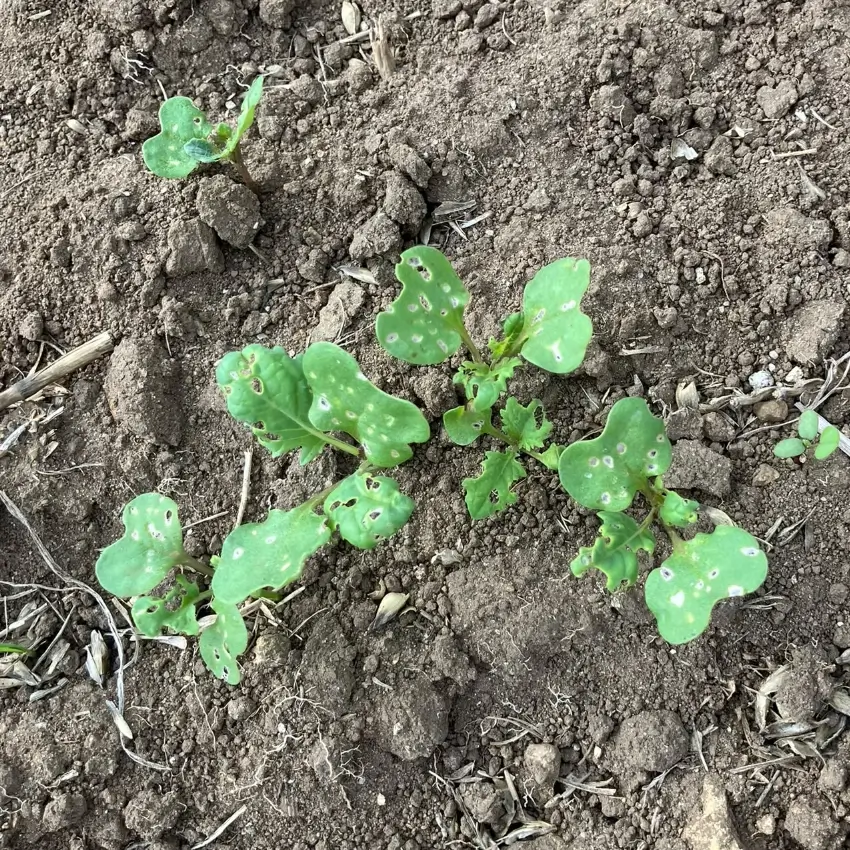


The challenge becomes particularly acute when environmental conditions slow establishment. Warm, dry soils can delay emergence and early development, extending the period during which young oilseed rape plants remain vulnerable to adult feeding.
With limited options for direct control, successful CSFB management increasingly requires an integrated approach, combining cultural practices, good establishment and targeted crop nutrition to give oilseed rape the best possible opportunity to grow through periods of pressure.
The objective: build a crop capable of growing through pressure
Managing CSFB is not simply about controlling the beetle. It is also about establishing an oilseed rape crop capable of tolerating feeding pressure.
A vigorous, healthy OSR plant does not necessarily prevent CSFB feeding. However, a crop that emerges rapidly, develops a strong root system and builds leaf area efficiently is better positioned to tolerate early grazing and recover from damage.
Where CSFB pressure coincides with environmental stress, nutritional management should therefore focus on supporting four key areas:
- Rapid establishment and biomass production
- Efficient photosynthetic activity
- Root development and nutrient acquisition
- Stronger plant structure and resilience
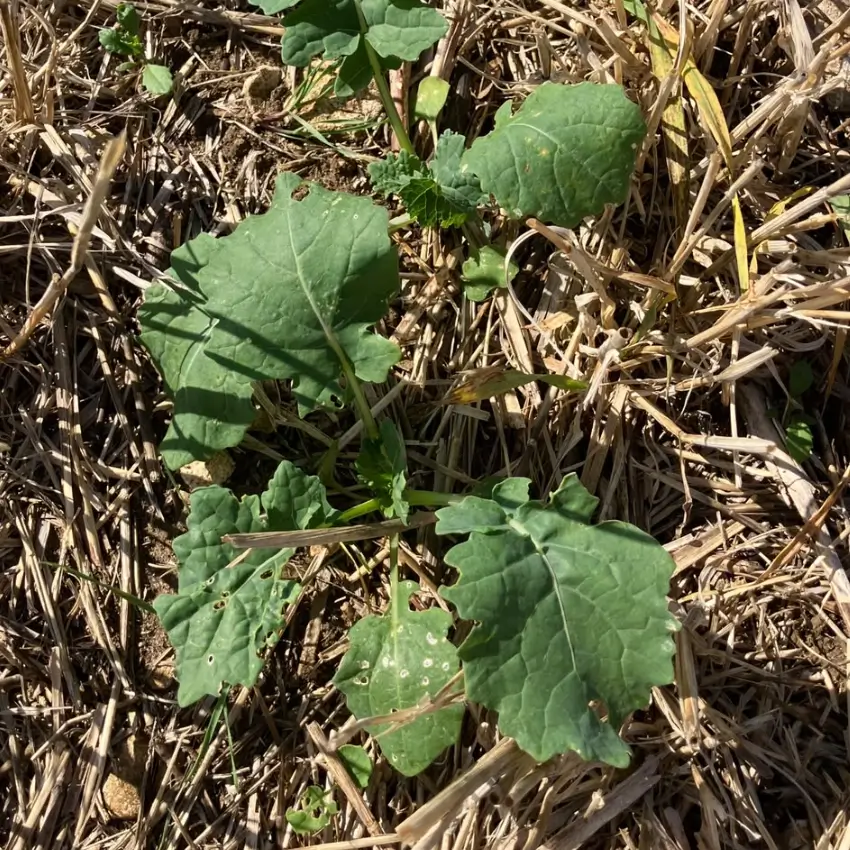
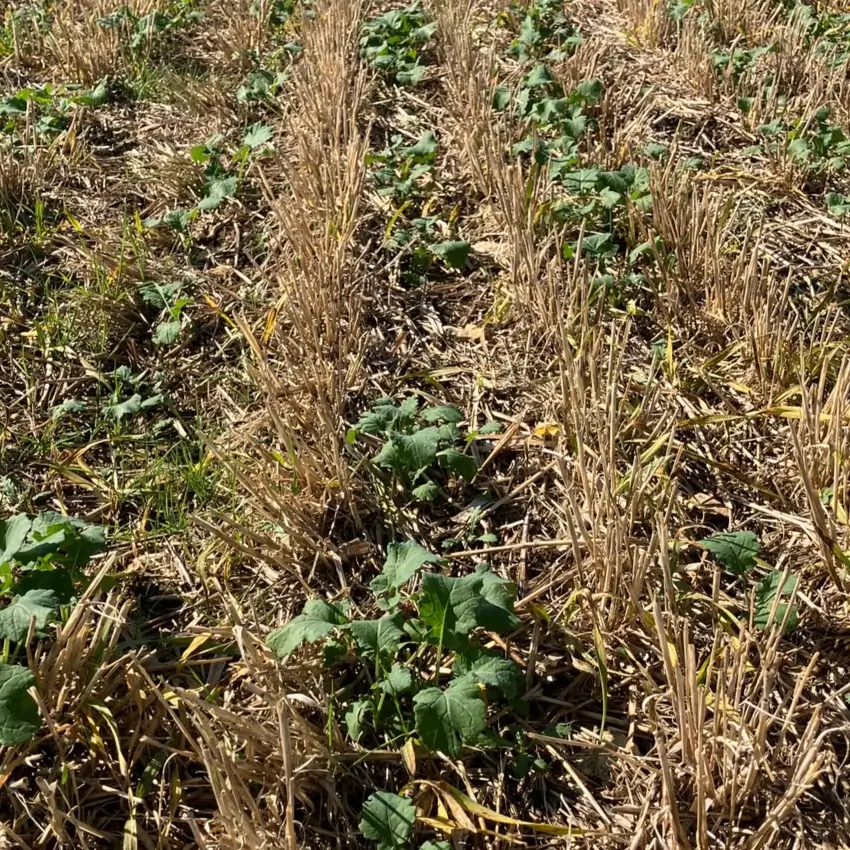
This becomes particularly important where establishment conditions are challenging. The longer a crop remains small and underdeveloped, the longer CSFB has an opportunity to cause significant damage.
CSFB management starts with an integrated approach
Crop nutrition should sit alongside, rather than replace, established cultural and integrated pest management strategies. Depending on individual field conditions and agronomic advice, these may include:
Optimising drilling date
Matching drilling decisions to soil moisture, crop establishment potential and anticipated CSFB activity can help reduce establishment risk.
Achieving rapid establishment
Good seed-to-soil contact, adequate moisture, appropriate seed selection and balanced nutrition all contribute towards rapid emergence and early growth.
Companion cropping
Companion species such as buckwheat, oats or clover may form part of a wider establishment strategy, providing additional crop cover and potentially influencing CSFB behaviour.
Trap crops and volunteers
In some systems, volunteer oilseed rape or sacrificial brassica areas can be used as part of a wider strategy for managing beetle movement and feeding.
Crop and stubble management
Management of previous OSR crops, volunteers and stubbles can form another component of an integrated CSFB strategy.
Encouraging crop vigour
Above all, creating a vigorous, well-established crop improves its ability to tolerate early feeding and continue developing despite pest and environmental pressure.
Where soil applications are reduced, the strategic use of foliar N can prevent the crop from entering metabolic shortage, protecting biomass buildup and preventing early senescence.
Where does targeted crop nutrition fit?
The AIVA approach is designed around this final principle: build the strongest crop possible, as early as possible.
Rather than relying on a single nutritional input, an integrated crop nutrition programme can address several aspects of establishment simultaneously. These include nutrient availability, rooting, plant structural strength, soil biology and stress resilience.
Within the AIVA programme, products including Sea2Soil™, Soteria, AIVA Phosphorus and Citadel have specific roles within this wider establishment strategy.
Sea2Soil™: supporting nutrition alongside CSFB pressure

Sea2Soil™ is a hydrolysed liquid fertiliser produced from farmed salmon, containing naturally occurring nitrogen, minerals, trace elements and amino acids.
Alongside its nutritional role during establishment, 2024 NIAB trials investigating Sea2Soil™ application to OSR under CSFB pressure recorded three notable observations:
1. Reduced feeding on cotyledons was recorded within two days of application across the half, full and double field-rate treatments tested.
2. Reductions in cotyledon feeding damage were observed for up to seven days after application, suggesting the treatment may help provide protection during an important early establishment window.
3. Sea2Soil™ treatments also recorded reduced stem feeding, although differences developed more slowly and became evident up to 12 days after a second application.
These results are particularly interesting when considered alongside Sea2Soil's wider nutritional role. During the establishment period, the objective is not simply to influence feeding pressure, but to simultaneously support a crop that can establish and develop quickly.
Soteria: strengthening the plant
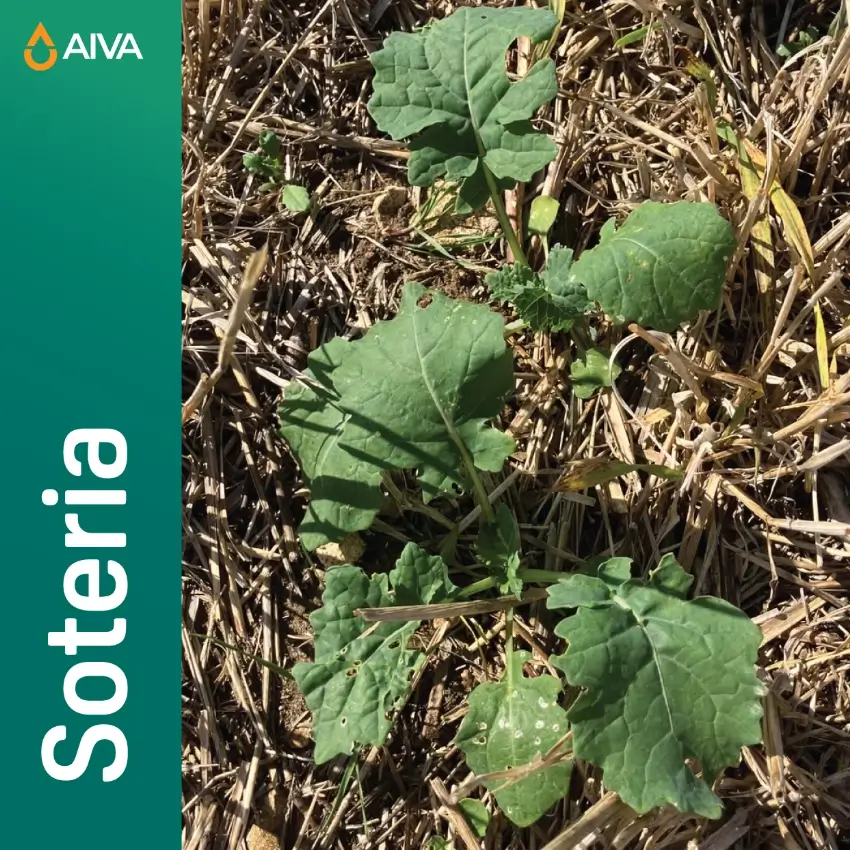
Soteria provides orthosilicic acid, a plant-available form of silicon.
Rather than acting directly on CSFB, silicon nutrition can support the plant's own physical and physiological defences.
Research into silicon and plant-herbivore interactions has identified several potential mechanisms, including silica deposition within plant tissues, changes to structural defences such as trichomes and the activation of plant defence responses.
For an establishing oilseed rape crop, this provides another component of the resilience strategy: supporting stronger plant tissues so the crop is better equipped to withstand environmental and pest pressure.
Reference: Singh, A., Kumar, A., Hartley, S. & Singh, I.K. (2020). Silicon: its ameliorative effect on plant defense against herbivory. Journal of Experimental Botany, 71(21), 6730–6743.
AIVA Phosphorus: driving establishment and early vigour
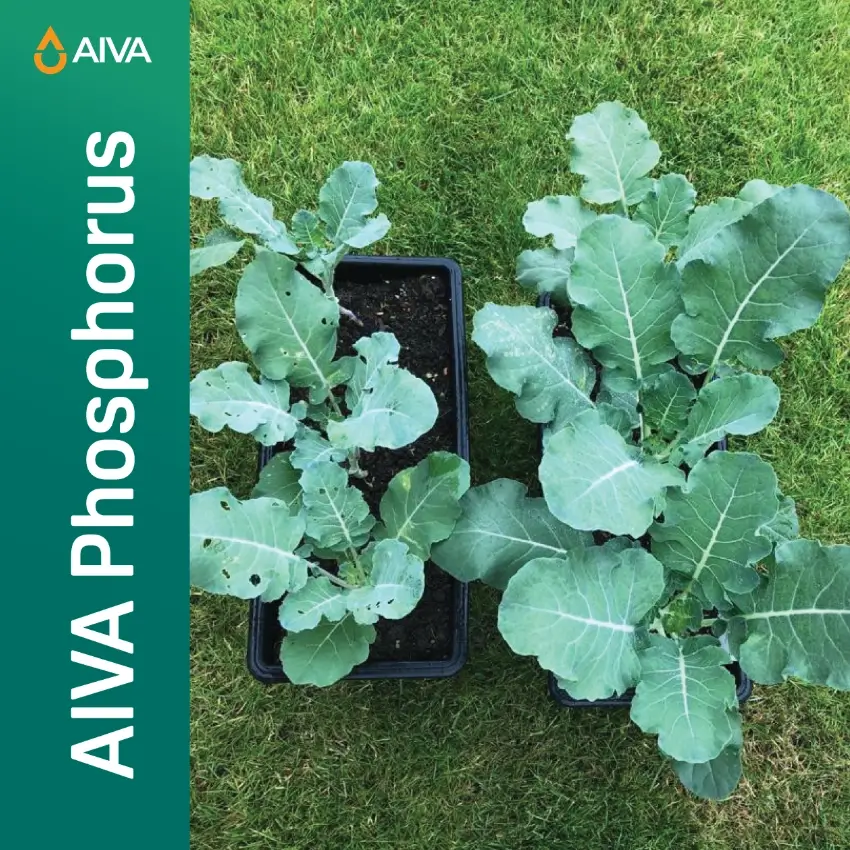
If the objective is to grow through the vulnerable establishment stage rapidly, phosphorus nutrition becomes particularly important.
AIVA Phosphorus, containing Flex Technology, is designed to support early rooting, establishment and biomass production.
Phosphorus plays a fundamental role in plant energy transfer and ATP production. Supporting phosphorus availability during establishment can therefore help drive root development and early crop growth.
For OSR under CSFB pressure, the principle is straightforward:
The faster the crop establishes, the quicker it can move beyond its most vulnerable seedling and cotyledon stages.
A well-rooted, actively growing plant is subsequently better positioned to tolerate grazing pressure while continuing to build biomass throughout the autumn.
Citadel: supporting the rhizosphere
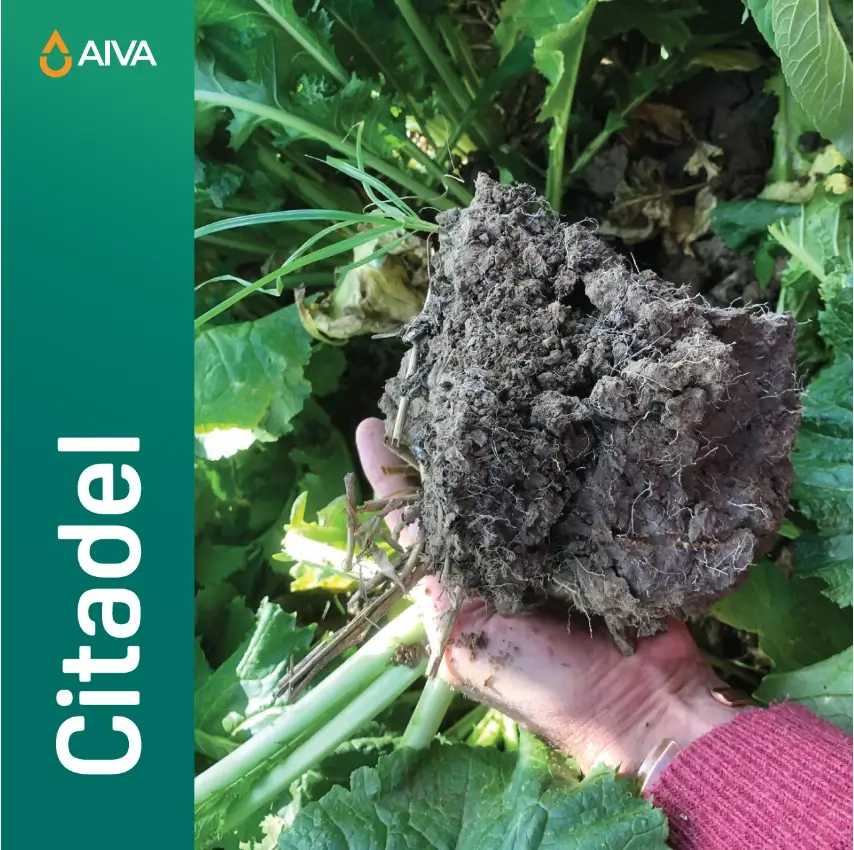
Establishment does not depend solely on the nutrition applied directly to the plant. Activity within the rhizosphere also influences nutrient cycling and availability.
Citadel provides an available carbon source designed to stimulate microbial activity within the root zone.
Supporting rhizosphere biology can encourage nutrient cycling and availability, complementing direct crop nutrition and helping establish the conditions required for strong root development and early biomass accumulation.
Within an integrated programme, Citadel therefore targets another part of the establishment equation: creating an active root environment capable of supporting a rapidly developing crop.
Bringing the strategy together
No single nutritional input should be considered a standalone solution to cabbage stem flea beetle.
Instead, the AIVA autumn approach brings together complementary nutritional technologies to address different aspects of crop establishment and resilience.
Example AIVA autumn OSR strategy
Sea2Soil™: 5 L/ha
Citadel: 5 L/ha
Nurture N: 1 L/ha
AIVA Phosphorus: 10 L/ha
Soteria: 0.15 L/ha
Together, the programme is designed to support:
- Rapid establishment and early crop vigour
- Root development and biomass accumulation
- Efficient nutrient utilisation
- Plant structural strength
- Natural plant defence responses
- Rhizosphere microbial activity and nutrient cycling
- Greater resilience to environmental and feeding pressure
- Reduced vulnerability during the critical early establishment period
The fundamental principle is simple: CSFB pressure is considerably more difficult to manage when the crop is struggling to establish.
Targeted nutrition cannot remove CSFB from the field, but when integrated alongside good establishment practices and wider IPM measures, it can help create a more vigorous, resilient crop that is better equipped to withstand pressure and continue growing.

About the Author
Nick Thorp
Commercial Sales Manager
Hello! I’m Nick, AIVA’s Technical Lead. For a few years now, I’ve been journeying on the regenerative road, developing crops, and applying inputs in a way that benefits the whole system. I started off as a grassland specialist, now I also develop arable systems towards a healthier, more profitable direction.
Got a question? Contact Me.