Soil Applied Fertiliser Prices Keep Moving. How Do We Get More Value From Every Unit Applied?

Thom Harrington
Business Development Director
For the last few seasons, growers have been forced to navigate a fertiliser market that seems to change direction overnight.
Nitrogen prices rise with energy costs. Phosphate markets react to global supply pressures. Geopolitics, manufacturing disruption and shipping challenges all influence the cost of nutrients arriving on farm.
While prices have eased from the unprecedented highs experienced in 2022, they remain significantly above long-term averages and continue to fluctuate. For many businesses, fertiliser remains one of the largest variable costs of crop production.
This creates a challenge for growers. Every fertiliser purchase represents a significant investment, and the pressure to achieve a strong return on that investment has never been greater.
The question for modern crop production is no longer simply:
"How much fertiliser should we apply?"
Instead, growers are increasingly asking:
"How do we maximise the value of every kilogram of nutrient applied?"
AHDB link to monitoring fertiliser prices: https://ahdb.org.uk/GB-fertiliser-prices
Nitrogen and phosphorus remain fundamental building blocks of crop production.
Nitrogen drives canopy development, biomass production and yield potential. Phosphorus supports root development, energy transfer and early crop establishment.
Without them, crop performance inevitably suffers.
However, achieving maximum value from fertiliser requires more than simply applying nutrients.
Nitrogen can be lost through leaching, volatilisation and denitrification. Phosphorus can become chemically fixed within the soil, making it unavailable to the plant despite significant reserves being present.
As most growers will recognise, increasing fertiliser rates does not always result in a proportional increase in yield.
This raises an important question:
Can we improve the efficiency of both applied fertiliser and existing soil nutrient reserves?
Increasingly, the answer points towards the role of soil biology.
Historically, crop nutrition has focused on supplying nutrients to the crop.
Today, more attention is being given to what happens after those nutrients enter the soil.
Healthy soils are complex living ecosystems containing billions of microorganisms. These microbial communities drive many of the processes responsible for nutrient cycling, organic matter decomposition and nutrient availability.
In simple terms, soil biology acts as the engine that helps move nutrients through the soil-plant system.
When soils support strong biological activity, nutrients are more effectively retained, recycled and made accessible to the crop.
As fertiliser costs remain volatile, many growers are recognising that improving the biological efficiency of their soil may be one of the most effective ways to maximise the return from their fertiliser investment.
This is where biological technologies such as BioplusT are increasingly finding a place within modern crop nutrition programmes.
BioplusT contains a consortium of beneficial microorganisms, including:
- Azotobacter spp.
- Beijerinckia spp.
- Bacillus spp.
- Paenibacillus spp.
Each species performs a specific function within the soil ecosystem. Together, they help support nutrient cycling, nutrient availability and overall soil function around the root zone.
Importantly, BioplusT is not designed to replace conventional fertilisers.
Its role is to help growers improve the efficiency of their existing nutrition programme and extract greater value from both applied fertiliser and naturally occurring soil nutrient reserves.
Brewed BioplusT alongside carbon food source (Citadel)
Applied at Drilling on Spring Barley.
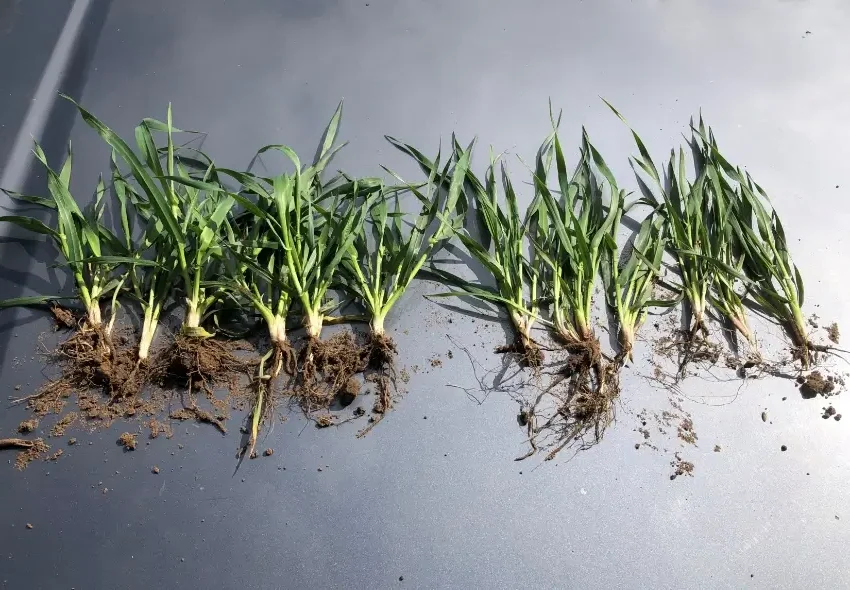
TreatedUntreated
GS39 assessments -
Field trial assessments:
19,300kg Fresh weight/ha
Brix: 12
Treated:
24,650kg Fresh weight/ha
Brix: 21
Brewed BioplusT alongside carbon food source (Citadel)
Applied at Drilling on Winter Wheat.
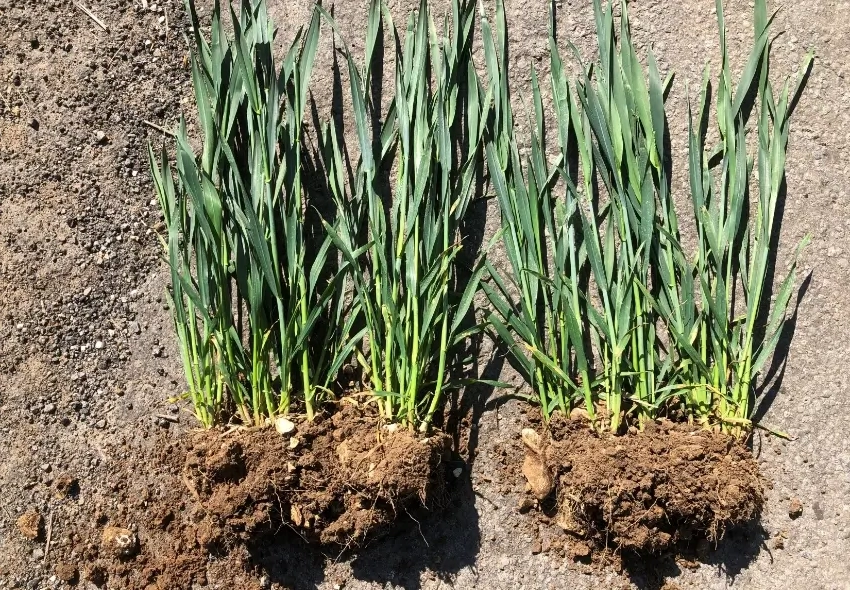
TreatedUntreated
Azotobacter and Beijerinckia are free-living nitrogen-fixing bacteria capable of capturing atmospheric nitrogen and converting it into forms that contribute to the soil nutrient pool.
Alongside their nitrogen-fixing capabilities, these microorganisms are known to support root development and stimulate biological activity within the rhizosphere.
While they are not capable of replacing a commercial nitrogen programme in a high-yielding crop, they can contribute to overall system efficiency by supporting nutrient supply and encouraging stronger root function.
As fertiliser prices continue to fluctuate, even modest improvements in nutrient utilisation can contribute towards a stronger return on investment.
BioplusT and Carbon source application at drilling


Many agricultural soils contain substantial reserves of phosphorus.
The challenge is that much of this phosphorus exists in forms that are unavailable to plants.
This is where Bacillus and Paenibacillus species play an important role.
These microorganisms help mobilise phosphorus by converting unavailable forms into plant-accessible nutrients through natural biological processes occurring around the root zone.
For growers, this creates an opportunity to derive greater value from nutrients already present within the field.
Instead of relying solely on purchased phosphate fertiliser, crops may gain improved access to both existing reserves and newly applied phosphorus.
At a time when phosphate prices remain unpredictable, maximising utilisation of every unit available within the soil has significant economic value.
BioplusT and Carbon source application at drilling
Mineral fertilisers continue to provide several key advantages:
- Immediate nutrient availability (depending on weather and environmental contributions)
- Predictable and consistent performance
- Precise nutrient analysis
- Proven yield response
- Flexibility across cropping systems
These characteristics ensure fertiliser remains a cornerstone of profitable crop production.
However, growers also face several ongoing challenges:
- High input costs
- Price volatility
- Environmental losses
- Reduced efficiency during periods of crop stress
- Dependence on global supply chains
As fertiliser investment increases, so too does the importance of ensuring every unit applied delivers maximum value.
Biological technologies offer a different approach to crop nutrition.
Rather than directly supplying large quantities of nutrients, their purpose is to improve how effectively the soil system functions.
Potential benefits include:
- Improved nutrient cycling
- Enhanced nutrient availability
- Stronger root development
- Increased microbial diversity
- Improved resilience during crop stress
- Greater fertiliser-use efficiency
- Improved return on fertiliser investment
Increasingly, growers are viewing biological products not as standalone inputs, but as tools that help protect and enhance the value of existing fertiliser programmes.
As with any agronomic input, biological technologies should be approached realistically.
Their performance depends heavily upon:
- Soil temperature
- Soil moisture
- Organic matter levels
- Soil structure
- Aeration
- Overall management practices
Biology functions best when favourable conditions allow microbial populations to establish and remain active.
For this reason, biological products deliver the greatest benefit when integrated into a broader soil health and nutrition strategy rather than being viewed as a standalone solution.
Good biology requires good soil conditions.
Fertiliser will remain one of the most important investments made in crop production. Nitrogen, phosphate, potassium and sulphur are fundamental yield-building nutrients and cannot simply be removed from nutrition programmes.
However, as fertiliser prices continue to fluctuate and margins remain under pressure, attention is increasingly turning towards how efficiently those nutrients are used. The question is no longer just how much fertiliser is applied, but how much of that investment ultimately reaches the crop.
This is where biological technologies are attracting significant interest. Modern research continues to demonstrate the critical role that soil biology plays in nutrient cycling, nutrient retention and nutrient availability throughout the season. A healthy and active microbial community helps drive the natural processes that convert soil reserves and applied fertiliser into forms that roots can access and utilise.
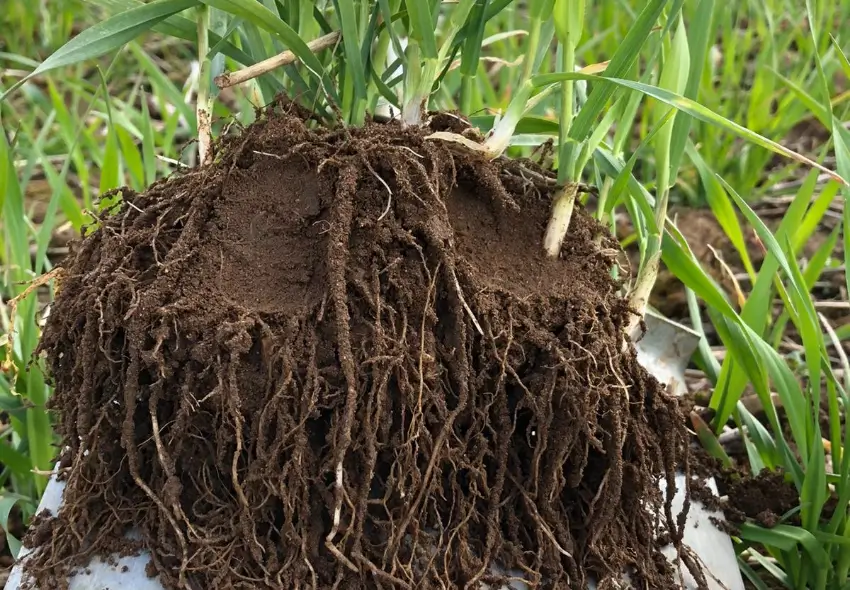
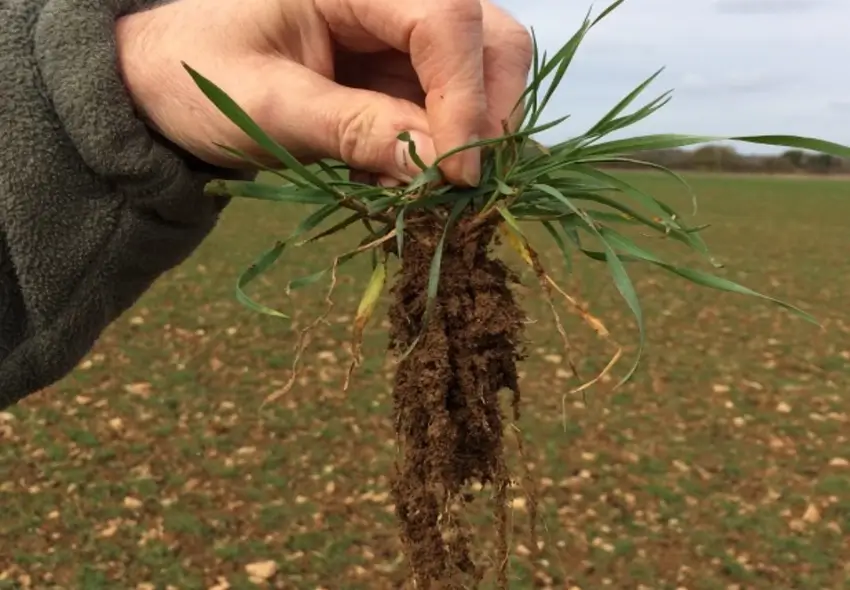
Recently emerged Rye in September following BioplusT application at drilling. Biological connection showing advanced rooting and biofilm.


The 2024 study Tipping the Plant-Microbe Competition for Nitrogen in Agricultural Soils highlights the complex relationship between crops, nutrients and soil microorganisms. While nutrients can become temporarily tied up within biological processes, an active microbial system also plays a vital role in retaining, recycling and gradually releasing nutrients back into the crop rooting zone. In simple terms, biology helps keep nutrients working within the system rather than being lost from it.
Products such as BioplusT are designed to support these natural processes. Through a combination of nitrogen-fixing and phosphate-mobilising microorganisms, they help improve nutrient cycling and nutrient availability, supporting greater efficiency from both existing soil reserves and purchased fertiliser inputs.
The most profitable growers in the coming years may not be those applying the highest fertiliser rates, but those achieving the greatest return from every kilogram applied. By combining conventional fertiliser programmes with biological technologies that enhance soil function, growers can build a more resilient nutrition strategy, improve nutrient-use efficiency and maximise the value of one of the largest investments made on farm.
Study link: https://www.sciencedirect.com/science/article/pii/S2589004224021989
Hear more about Biology directly from Founder Mike Harrington and senior regenerative agronomist Ben Harrington on the YouTube series, Root of the Matter.