Soil-Applied Phosphate Is Failing Your Autumn Cereals, Here’s Why

Thom Harrington
Business Development Director
Foliar Phosphorus vs Traditional Phosphate Fertilisers in Autumn Cereals: Why Efficiency Matters More Than Tonnes Applied
For decades, cereal establishment programmes have relied heavily on soil-applied phosphate fertilisers such as Triple Super Phosphate (TSP) and Diammonium Phosphate (DAP). These products undoubtedly play an important role in building soil fertility and supporting crop establishment. However, as fertiliser costs remain volatile, nutrient-use efficiency comes under greater scrutiny, and growers seek improved returns on investment. It is increasingly important to question whether applying more phosphorus to the soil is always the most effective solution.
Today, advances in foliar nutrition are providing growers with an alternative approach. Rather than relying solely on soil reserves and soil-applied phosphorus, targeted foliar phosphorus applications from the three-leaf stage through tillering offer a highly efficient method of delivering phosphorus directly to the crop when it is most needed.
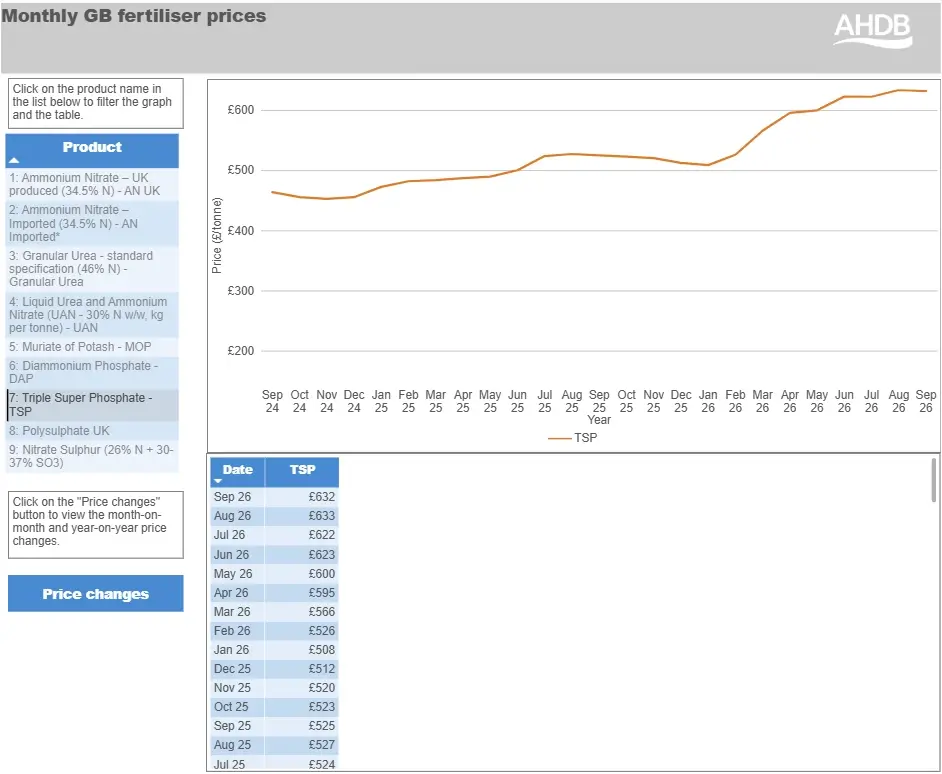
Triple Super Phosphate contains approximately 46% phosphate (P₂O₅) and has traditionally been used to build and maintain soil phosphorus indices.
TSP relies entirely on root interception and uptake. Once applied, phosphorus rapidly reacts with calcium, iron and aluminium compounds in the soil, reducing the proportion immediately available to the crop.
Research funded by AHDB revealed that the first-year crop recovery rate of freshly broadcast TSP averages just 4%, with reported recoveries ranging from 0-8%. This means that the overwhelming majority of applied phosphate becomes tied up within soil reserves rather than being immediately available to the crop.
In many UK situations, particularly during autumn establishment, the issue is not necessarily the total amount of phosphorus present in the soil, but rather the crop's ability to access it. Cold temperatures, waterlogging, compaction and restricted root systems can all limit phosphorus uptake despite adequate soil reserves. As a result, a grower may have applied significant quantities of TSP while still observing visual phosphorus deficiency in the crop.
DAP has often been favoured as a starter fertiliser because it supplies both phosphorus and nitrogen.
However, DAP faces many of the same challenges as TSP. Once placed in the soil, phosphorus remains relatively immobile and availability can become restricted by environmental conditions.
According to RB209 nutrient management guidance, standard granular phosphate fertilisers such as DAP typically achieve first-year crop recovery rates of only 0-15%, largely due to rapid phosphorus fixation within the soil. While the nutrient remains present, much of it is unavailable to the crop during the period when demand is highest.
In addition, DAP prices are heavily influenced by both global phosphate and nitrogen markets, increasing growers' exposure to commodity price volatility.
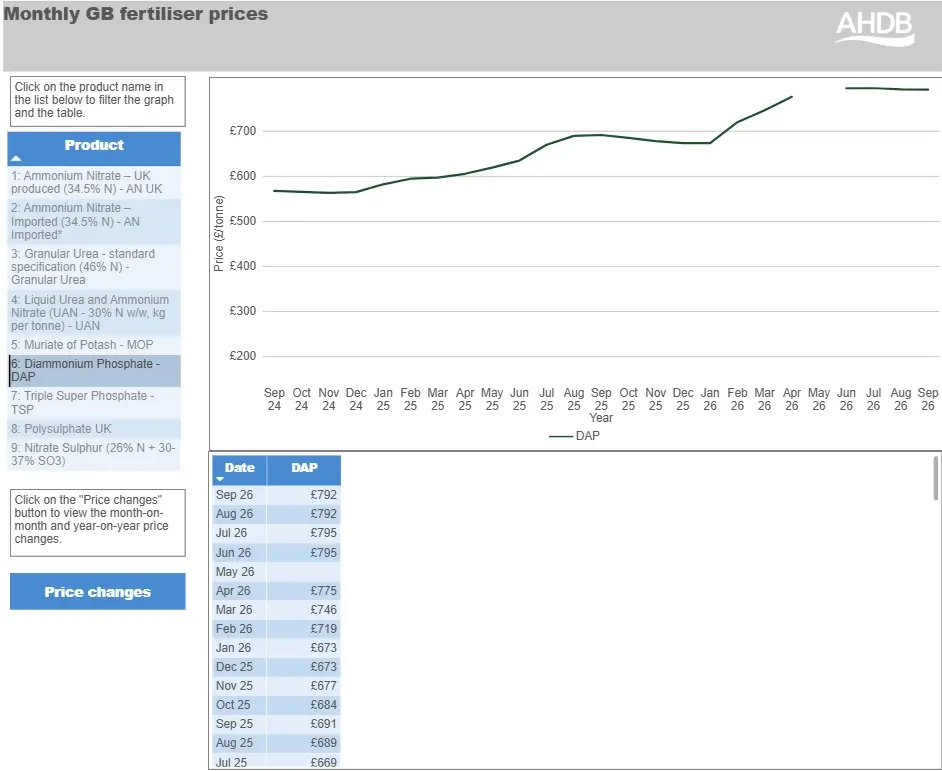
Perhaps the biggest challenge with soil-applied phosphorus is efficiency.
Phosphorus is one of the least mobile nutrients within the soil profile. Much of the phosphorus applied becomes fixed or tied up over time, contributing to soil reserves but not necessarily feeding the crop when demand is greatest.
Consequently, growers often apply tens of kilograms of phosphorus per hectare to achieve what is ultimately a relatively small amount of plant uptake during autumn establishment.
The reality is that crops require available phosphorus, not simply phosphorus present within the soil.
Foliar phosphorus approaches the problem from a different angle.
Instead of attempting to move phosphorus through the soil and into the root system, foliar application delivers phosphorus directly through the leaf.
This provides several advantages:
- Rapid crop availability.
- Independence from soil temperature.
- Reduced impact from waterlogging.
- Reduced impact from compaction.
- Improved nutrient-use efficiency.
- Immediate support during periods of peak demand./li>
- Reduced risk of environmental impact in restricted zones./li>
From the three-leaf stage onwards, crop demand for phosphorus increases significantly as the plant develops roots, initiates tillers and builds biomass.
A foliar application at this timing ensures phosphorus reaches the plant regardless of what is happening beneath the soil surface.
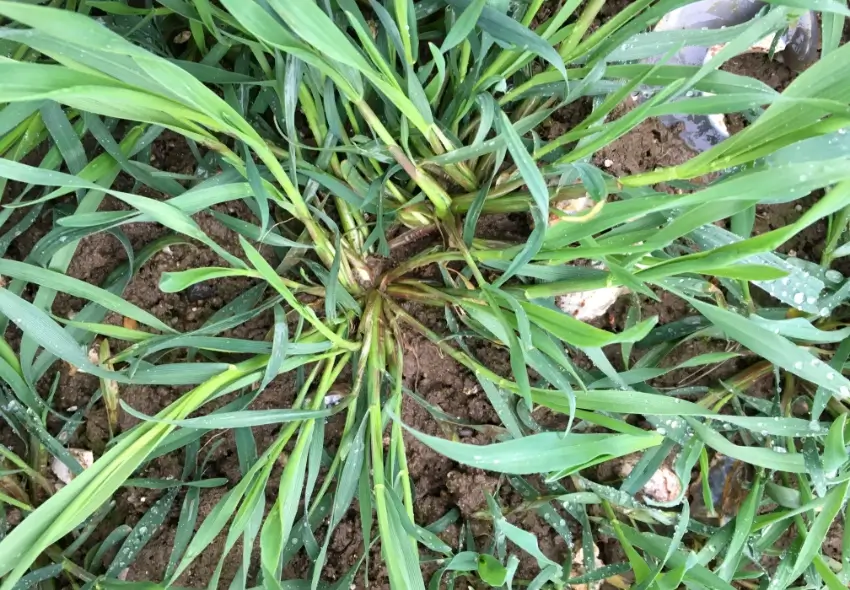
When comparing nutrient efficiency, the difference becomes particularly striking.
Broadcast TSP may achieve average first-year recoveries of approximately 4%, while DAP and similar granular phosphate fertilisers commonly achieve 0-15% crop recovery in the year of application.
In contrast, AIVA Phosphorus has been formulated to deliver greater than 90% nutrient efficiency, providing direct uptake through the leaf and bypassing the soil fixation processes that limit conventional phosphate fertilisers.
This creates a fundamentally different phosphorus delivery system:
Rather than relying on soil chemistry, moisture levels and root interception, AIVA delivers phosphorus directly into the plant where it can immediately support:
- Root growth.
- ATP production and energy transfer.
- Tiller initiation.
- Biomass accumulation.
- Crop recovery following stress.
The comparison highlights an important distinction: traditional phosphate fertilisers are primarily designed to build soil fertility, whereas AIVA is designed to maximise crop uptake and nutrient use efficiency during critical growth stages.
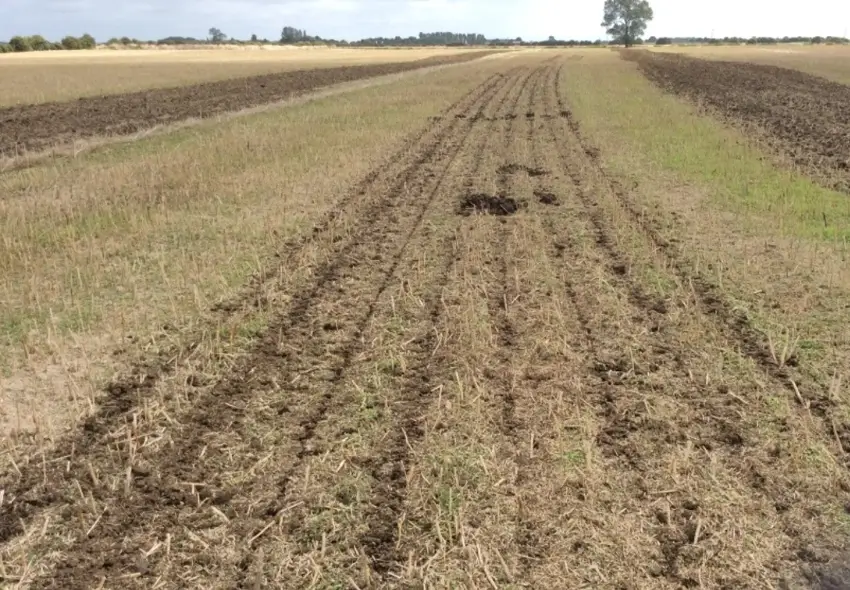

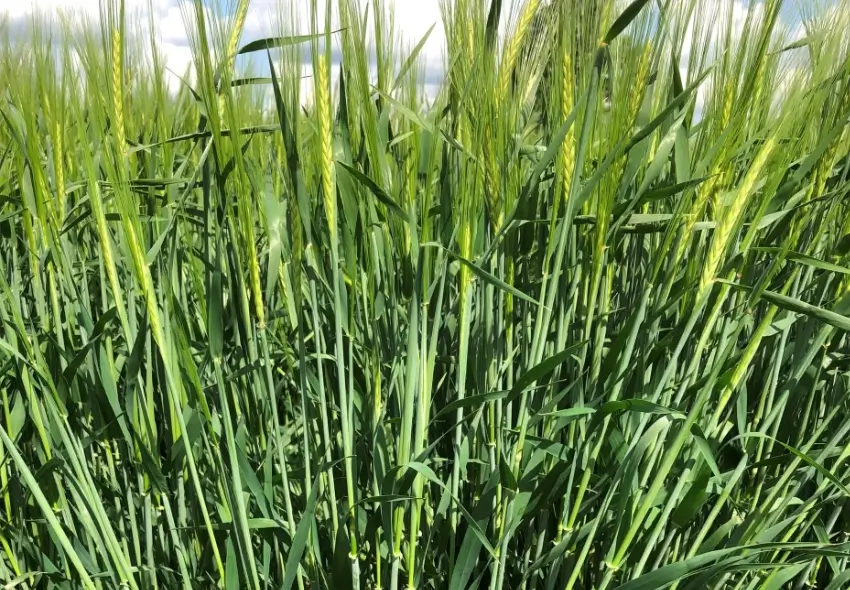
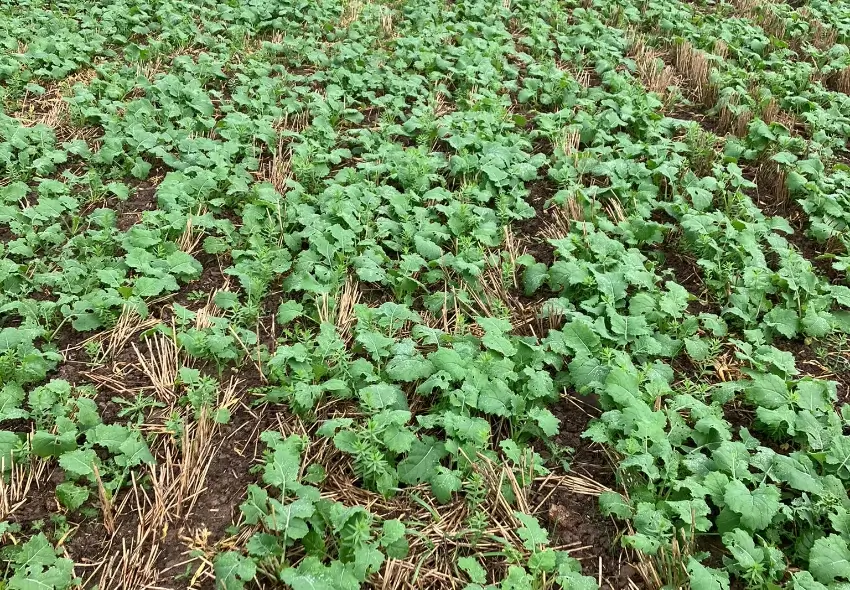
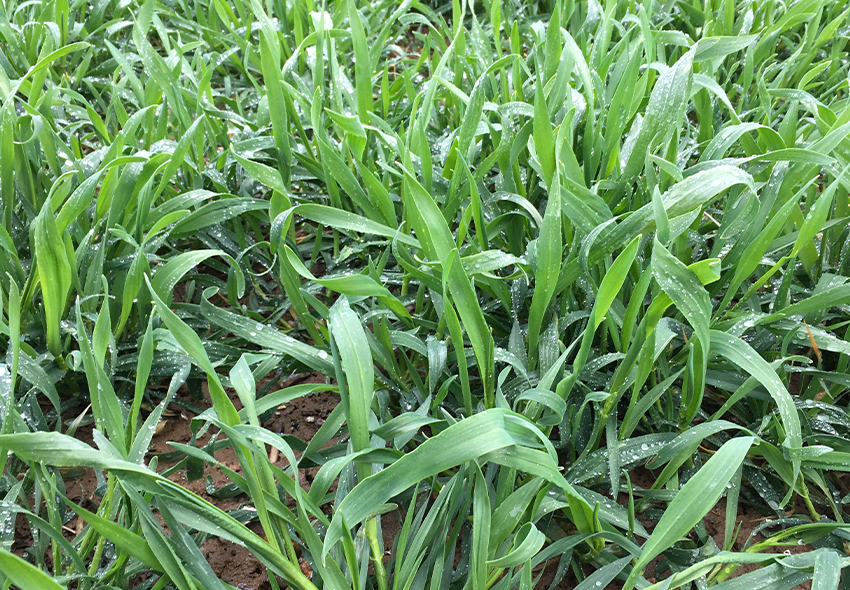
Spring barley was drilled into a poor, waterlogged seedbed (Before) following a failed winter wheat crop. Despite the challenging establishment conditions, two subsequent applications of AIVA Phosphorus stimulated exceptional crop development, resulting in over 30 tillers per plant (After).
This level of tillering highlights the crop's ability to recover and maximise growth when supported with readily available phosphorus during key developmental stages.
The results demonstrate the effectiveness of AIVA Phosphorus in driving early-season vigour and tiller production, even where soil conditions would typically limit crop performance, ultimately supporting stronger establishment and yield potential.
One of the most compelling arguments for foliar phosphorus is efficiency.
A soil-applied phosphate fertiliser programme may involve applying 30-80 kg/ha of phosphate or more. In comparison, AIVA is applied at just 10 L/ha, delivering an efficient it of 16.5% phosphorus directly into the crop.
Despite significantly lower application volumes, highly efficient foliar uptake allows the crop to access a far greater proportion of the nutrient applied.
The result is often:
- Improved tiller numbers.
- Enhanced root development.
- Faster establishment.
- Increased biomass accumulation.
- Greater nutrient-use efficiency.
Rather than building soil phosphorus reserves, foliar phosphorus focuses on feeding the crop at the point of greatest need.

An effective foliar phosphorus programme should never focus on phosphorus alone.
Zinc
Zinc and phosphorus work closely together in driving root growth and energy transfer.
Adequate zinc supports:
- Root elongation.
- Auxin production.
- Early vigour.
- Improved nutrient acquisition.
Magnesium
Magnesium sits at the centre of every chlorophyll molecule.
Without sufficient magnesium:
- Photosynthetic efficiency declines.
- ATP production decreases.
- Phosphorus utilisation becomes less efficient.
Sulphur
Sulphur is frequently overlooked during autumn nutrition.
Yet sulphur plays a critical role in:
- Protein synthesis.
- Nitrogen efficiency.
- Enzyme activity.
- Plant metabolism.
Together, phosphorus, zinc, magnesium and sulphur create a balanced nutritional package capable of supporting vigorous autumn growth and stronger tiller retention
AIVA combines 16.5% phosphorus with sulphur, magnesium and zinc in a single foliar application.
Using proprietary Flex Technology®, nutrients are bonded into highly stable complexes with a low Point of Deliquescence, promoting rapid plant absorption and improved nutrient retention on the leaf surface. This allows the crop to access nutrition quickly and efficiently across a wide range of environmental conditions.
Applied at just 10 L/ha, AIVA delivers a highly targeted nutritional intervention precisely when crops require support during establishment and tillering.
The traditional approach to phosphorus nutrition has focused on the quantity of phosphorus applied. Modern crop nutrition should focus on the amount of phosphorus that actually reaches and benefits the plant.
While TSP and DAP remain valuable tools for maintaining long-term soil fertility, their first-year crop recovery rates can be surprisingly low due to soil fixation, often ranging from just 0-15%. By comparison, AIVA Phosphorus delivers greater than 90% nutrient efficiency, ensuring more of the applied phosphorus is absorbed and utilised by the crop.
For growers looking to maximise autumn establishment, drive tillering and achieve the highest return on fertiliser investment, AIVA offers a smarter solution: delivering phosphorus directly to the plant, supported by sulphur, magnesium and zinc, and powered by Flex Technology® for rapid uptake and exceptional efficiency. The result is stronger crops, better nutrient utilisation and greater confidence that every litre applied is working where it matters most.