Managing Yellow Rust in Winter Wheat – Protecting Yield at Early Tillering (GS 20–29)

Nick Thorpe
Technical Lead
Yellow rust remains one of the most economically damaging foliar diseases in UK winter wheat, and its influence is particularly critical when it establishes early, during the tillering phase (GS 20–29). While the crop is still building its foundation for spring growth, early infections can quietly but significantly compromise plant performance. However, it’s becoming increasingly a one to watch early on this year.
Wheat Growth Stages
The Critical Window: Why Early Tillering (GS 20–29) Defines Yield Potential
At early tillering, winter wheat is investing heavily in forming its yield potential. Each tiller represents a future ear, so any factor that limits tiller initiation or survival directly reduces the final ear count. Yellow rust infection at this stage diverts plant resources away from growth and into defence, which can weaken individual tillers and reduce their ability to survive into stem extension.
Physiological Damage
Beyond the Leaf: How Yellow Rust Limits Tiller Survival and Root Growth
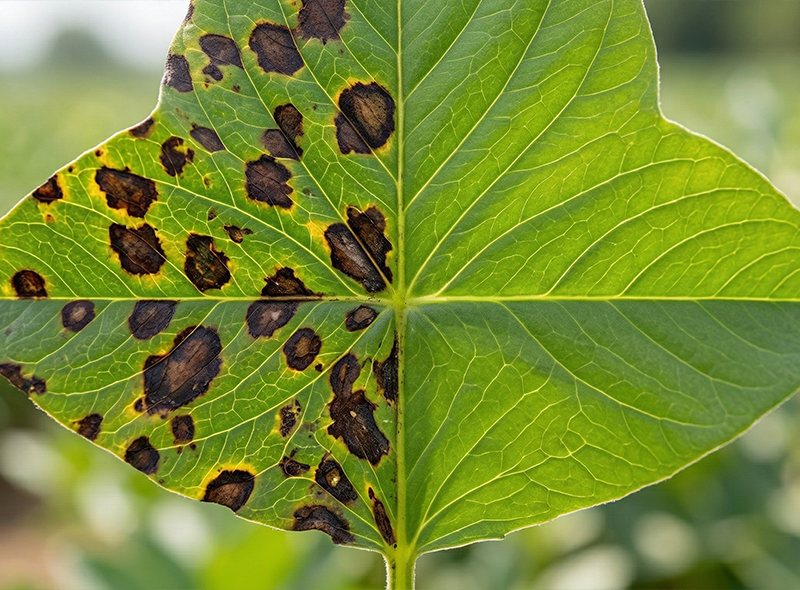
Yellow rust is highly efficient at stripping photosynthetic capacity. Even low levels of early infection create chlorotic and necrotic lesions, reducing leaf function and lowering energy available for root growth, nutrient uptake, and tiller support. This loss in photosynthetic area is particularly damaging early on, as the plant has not yet built a large canopy to compensate.

Close-up of active yellow rust sporulation on winter wheat leaf during tillering stage GS 25
Crop Architecture
Maintaining Uniformity: The Impact of Early Infection on Spring Management Decisions
Early infections can result in uneven crop development, with stunted or weakened tillers failing to keep pace with healthy ones. This variability complicates spring management decisions, particularly nitrogen timing and PGR planning, making it harder to optimise inputs across the field.
Pathogen Dynamics
The 7-Day Cycle: Managing Rapid Disease Build-up in Cool, Moist Conditions
If left unmanaged, early yellow rust becomes the starting point for escalating disease pressure later in the season. The pathogen cycles rapidly under cool, moist conditions, producing new pustules every 7–14 days. Early establishment gives the disease a head start and increases reliance on fungicide programmes at T0 and T1, raising both risk and cost.

Early yellow rust infection spreading through a wheat plant base at tillering, showing chlorotic lesions and necrotic tips.
Varietal Resistance
Navigating Varietal Resistance: The Impact of YR15 Shifts on AHDB Disease Scores
While breeding progress has previously reduced the susceptibility of many mainstream varieties, shifts in yellow rust races to YR15 mean resistance breakdowns are now occurring in previously high scoring varieties. Early monitoring is essential, particularly in varieties rated 5 or below on the updated AHDB disease scores, or in any crop where inoculum was present the previous season.
Note: Always cross reference your current variety against the 2026 AHDB Recommended List specifically for “Juvenile Rust” ratings, as adult plant resistance may not yet be active at GS 20–29.

Winter wheat crop showing breakdown of varietal resistance to yellow rust race YR15 in early spring.
Integrated Management
- Building Resilience: Combining T0 Fungicides with Targeted Nutritional Inputs
- Early Scouting: Critical for control before visible sporulation.
- Strategic T0s: Essential when conditions are conducive or infection is present.
- Nutritional Support: Aiding the plant in removing “lodged sugars” that feed rust.
- Wheat Growth Stages (GS 20–29)
- Physiological Damage
- Crop Architecture & Uniformity
- Pathogen Dynamics (7-Day Cycle)
- Varietal Resistance (YR15 Shifts)
- Integrated Management Strategies

About the Author
Nick Thorp
Technical Lead
Hello! I’m Nick, AIVA’s Technical Lead. For a few years now, I’ve been journeying on the regenerative road, developing crops, and applying inputs in a way that benefits the whole system. I started off as a grassland specialist, now I also develop arable systems towards a healthier, more profitable direction.
Got a question? Contact Me.