Grassland Alternative Forages

Olivia Bye
Crop Health Consultant, South
This year, even your normal perennial grass species struggled to provide high-quality, longer-term grazing ground for animals, while legumes – especially white clovers – didn’t seem to take. On my family farm, about five years ago, we decided to start growing alternative forages after the perennials weren’t bouncing back after grazing. Unfortunately, it seems the same conversations are being repeated this year.
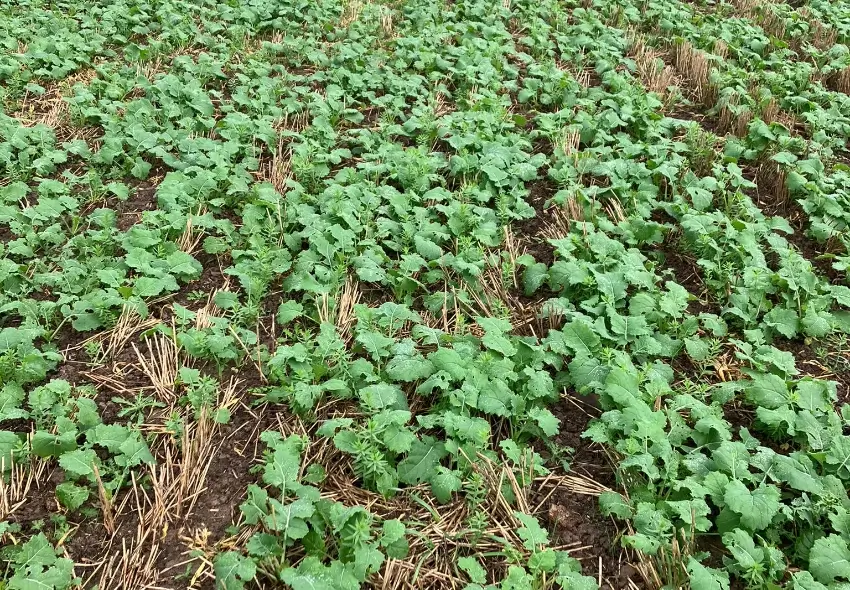
I’ve seen some good-looking forage crops in the past week that are now coming through nicely. Brassica forages are generally tolerant to frost and boast a high energy content, making autumn and overwinter grazing possible. Forage kale, forage turnips, swedes, or forage rape are among the options. To avoid a mess, these particular crops are best strip-grazed!
It’s all about diversity – feeding solely a brassica-based diet could cause harm to ruminants. With that in mind, I’ve had interesting conversations about reserve cropping. There are some grass species that can be planted within the year and left as a reserve crop for early spring. Perennials like cocksfoot and fescue work well.
Stockpiling into the winter isn’t necessarily new, but the importance of making good quality feed – in a year where we’ve seen both ends of weather extremes – is new, and therefore our approach needs fresh thinking.
As always, treating any root in the ground as a cash crop – and feeding it as such – will ensure the crop gets off to the best possible start and begins feeding back into your system from day one. Especially when it comes to livestock, the overarching motivation is to ensure we have reliable food stores. There is no better way to encourage that than to feed it. A crop can only ever be as good as its management.
See this month’s article on ‘OSR Seed Drenches’ for examples that promote a healthier crop, including elements of carbon, nutrition and silicon.

The Importance of Preventing Drops in Selenium Levels
Something else to reflect on over the winter is selenium levels. Selenium is a fickle thing to get right – especially in grassland. While brassicas are naturally higher in selenium, grassland can be harder to manage, as selenium levels fluctuate with other applications going into the field.
After the year we’ve had, you’ll want to push your grass to grow, which means increasing inputs. But quicker plant growth, can weaken selenium levels and impact plant uptake.
A reduction in selenium in ruminant diets can lead to a host of health issues, causing more financial spend on reactive treatments. This is especially important for winter calvers. Although they benefit from the alternative forages mentioned earlier, a selenium deficiency puts calfs at a higher risk of white muscle disease.
Due to the stark differences in weather conditions this year, selenium is expected to drop by a further 10% in our soils (source: https://www.farmersguide.co.uk/business/soil-selenium-levels-predicted-to-drop/). Tissue testing and adding inputs throughout the year to counteract this wouldn’t go amiss in the long run.

Aiva’s Solution
AF Rally – a grassland multi-trace element mix with added selenium – can prove to be very useful to farmers transitioning to a longer grazing system or during periods of suppressed growth.
Using a supplemented spray throughout the season offers benefits beyond livestock health when you consider a whole-farm systems approach.
For a programme related to grassland, this might look slightly different from a cereal crop, a boost after grazing or cutting to bring back some of your depleted levels of nutrients could be;
- AF Citadel- 10L/ ha
- AF Rally- 4 L/ha
- AF Phosphorus- 5L /ha
And potentially some plant growth promoting biology, such as AF Consortium.

Citadel™
OF&G organically approved, natural multi-use, carbon-based fertiliser. CITADEL is loaded with great levels of amino acids, including an abundance of Glutamic acid and humic extracts.

Rally
Optimising grassland nutrient quality and performance as a balanced nutrient package. Contains: Amide N, S, Mg, K, Zn, Mn, Cu, B, Co, Se, I, Na, and Mo.

Aiva Phosphorus
Energise your crops quickly and efficiently. A highly efficient foliar phosphorus, designed to provide the impetus for growth and rooting, supported by complexed beneficial nutrition.
About the Author
Olivia Bye
Crop Health Consultant, South
Nice to meet you, my name’s Olivia, and I’m a Crop Health Consultant here at AIVA. My passion is creating healthy, nutritionally dense crops within a system that benefits ecologically. Education is key to the way I work. Providing my clients with knowledge allows them to make informed decisions to benefit their systems.
Got a question? Contact Me.