Wheat at Cranborne Estate

Nick Thorpe
Commercial Manager
In 2023, Dan Moore joined Cranborne Estate in Dorset as Farm Manager from a mixed farm in South Wales. Cranborne Estate is another mixed enterprise growing Wheat, Barley, Oats and Peas along with various environmental, conservation and nature focussed efforts. Livestock grazing and woodlands offer alternative abilities to manage inputs, costs and rotation.
Cranborne were already direct drilling but wanted to do more to move further into a regenerative transition. Dan was to bring his knowledge, experience, and enthusiasm for this route to the Estate. He had already been working with Aiva in South Wales but now had the freedom at Cranborne to implement practices which he believed could hasten the journey.
2023: Cranborne’s Journey with Aiva Begins
PGRs etc. with no defined plan on nutrition applications. In 2022, winter wheat yields averaged 7t/ha.
Since joining, Dan and Aiva have worked together to introduce a more systems-based approach into the estate. We recognised that we would have to prove the concept and so, in the first year we didn’t introduce any changes so as to get a baseline to work from.
For the 2023/2024 season, Dan modified and strengthened many farming practices, like mosaic cropping where no two fields of the same crop adjoin – reducing potential disease & pest vectors. This, along with variety choice, started a rapid transition away from chemical heavy inputs.
Autumn nutrition was introduced to increase plant numbers and establishment health, followed by a small amount of spring nutritional inputs including silicon. This allowed Dan to reduce fungicides down to just a flag leaf option with no PGRs. Yields were maintained on the 5-year average of 8t/ha, which allowed Dan to further push forwards.

2024/2025: No Fungicides Needed Here!
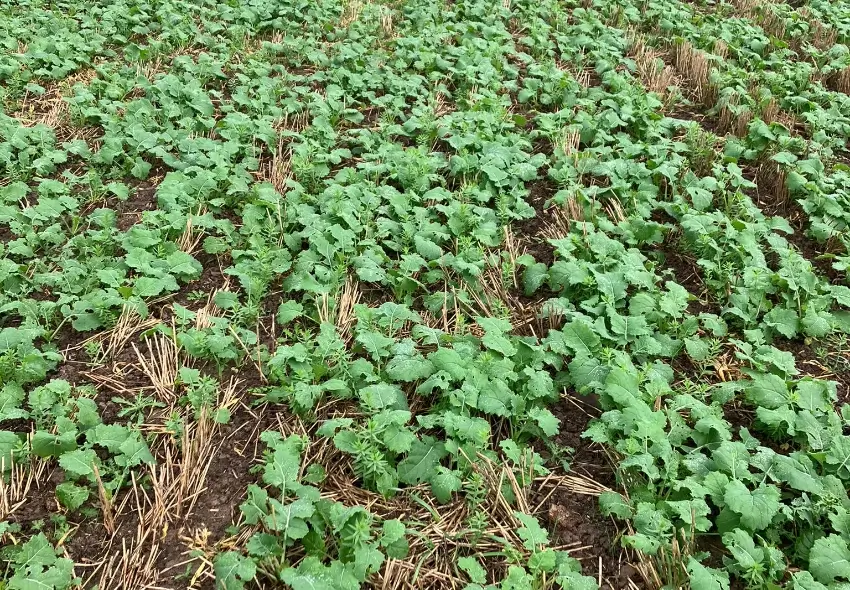
In the 2024/2025 season we used the full range of Aiva nutrition, both soil & foliar applied, including biologicals, silicon, salicylic acid, carbons & foliar nitrogen. With the exception of 4 fields which broke down late to brown rust, no fungicides were used on the 230ha wheat area. No PGRs were applied yet again, and total nitrogen was reduced by at least 40kg/ha soil applied (although 10kg/ha foliar nitrogen helped to offset this reduction). Soil Nitrogen applications maxed at 160kg/ha soil N with the 10kg/ha foliar in addition.
With the wheat area now harvested, yields are averaging out at 8t/ha still so no reduction in yield has occurred. However, the variability caused by the spring drought is clear to see with better soils on the Downs seeing 9.5t/ha & 12.5t/ha crops whilst light soils are down at 6.5t/ha – 7.5t/ha.
There haven’t been many fields where the rotation has been wheat recently enough for comparison, however from the two which have so far been able to offer the view against the old system the results are clear. In 2022, one field that did 6.5t/ha this year achieved 10t/ha (off 70kgN/ha less). Another which was wheat in 2023 did 7t/ha (a great result at the time) but this year reached 9t/ha.
Input Costs Considered
As part of Dan’s role, he is very particular and determined to understand the costs and numbers which lie behind this change in direction. An often-used attack to this approach to farming is to suggest that it either directly leads to lower yields or that reducing input costs leads to lower yields. Dan is proving that this is not the case.
Input costs have been averaged across the whole 230ha winter wheat but stack up well…
- £1.22/ha on fungicides (only the 4 fields mentioned above)
- £62.73/ha on herbicides (post emergence & Broadway)
- £104.80/ha on nutrition
- £184/ha on fertiliser (including compost trial, soil N & foliar nitrogen)
- £14.80/ha on slug pellets
Not only have yields been maintained, but the final tally shows the systems approach being up to £80/ha under budget creating the best of both worlds, lower spend and higher returns. Had the drought not been a factor, we could have seen a significant increase in yield across the wheat but, unfortunately, we’ll never know.
WildFarmed Winter Wheat
As a final note, Cranborne has also grown some WildFarmed winter wheat this year. Dan budgeted to achieve a 5t crop which yielded 7.3t/ha. An excellent result, although whilst bushel weight, spec & Hagberg were all excellent, the protein has slightly missed the mark.
There are already learnings and plans in mind to try and crack this next year along with a split the in approach to wheat dependent on rotation, however, some improved spring weather conditions would certainly help.
Are you ready to see what a regenerative transition could look like on your farm?
The success at Cranborne Estate demonstrates that a systems-based, nutritional approach can maintain yields while significantly cutting input costs and chemical reliance. This journey isn’t about removing inputs, but replacing them with a strategy that builds resilience from the soil up.
Speak with one of our agronomists today to build a tailored plan for your unique challenges and goals.
About the Author
Nick Thorp
Commercial Manager
Hello! I’m Nick, AIVA’s Commercial Manager. For a few years now, I’ve been journeying on the regenerative road, developing crops, and applying inputs in a way that benefits the whole system. I started off as a grassland specialist, now I also develop arable systems towards a healthier, more profitable direction.
Got a question? Contact Me.