Biological Brewing: Your Questions Answered

Thom Harrington
Business Development Director
Following our seminar on soil biology, biological brewing and the new AIVA BioAeration Unit, we received a fantastic range of questions from growers looking to understand how biological approaches can be incorporated practically into crop nutrition programmes.
From selecting food sources and brewing microbial consortia to seed treatments, soil conditions and machinery, we have brought together the key questions from the session below.
Our approach at AIVA is simple: biological inputs should not be considered in isolation. Their value comes from understanding the relationship between soil biology, crop nutrition, soil structure and plant physiology, and then creating the right environment for those biological populations to function.
1. Can I use multiple food sources in a biological brew, and what happens if I use too much?
Yes. In fact, using a combination of food sources can be beneficial because different materials provide different forms of nutrition to the organisms within the brew.
Simple and complex sugars, trace elements, protein hydrolysates, seaweed extracts and amino acids can each contribute something different. The aim is not simply to provide as much food as possible, but to create an appropriate nutritional environment for the biological population you are trying to encourage.
As a general starting point, we recommend keeping the total food source at approximately 0.5 to 1% of the total brew volume, unless the particular brewing protocol specifies otherwise.
More is not necessarily better. Excessive food can increase biological oxygen demand and potentially create conditions where oxygen is consumed faster than it can be replenished. Maintaining good aeration and avoiding stagnant areas within the brewing vessel are therefore fundamental.
Ultimately, food selection should follow the biological objective. A bacterial-dominated brew may require a different nutritional approach to one intended to encourage greater fungal activity.
2. How would you combine carbon with glyphosate applications?
AIVA's preferred approach is generally to use fulvic acid (Nurture N) rather than simply adding a generic carbon product.
The distinction is important. Fulvic substances are valued not only as a source of organic carbon, but also for their interactions with nutrients and other compounds within solution. For this reason, liquid fulvic products can form part of a wider spray strategy where glyphosate is being applied.
However, tank-mix performance is influenced by factors including water quality, pH, formulation, glyphosate product and application rate. Growers should therefore always check individual product labels and compatibility guidance before tank mixing.
The broader principle is that carbon inputs should have a defined purpose within the programme rather than being added simply because "carbon is good".
3. You mentioned soil "biohacking" or priming. What does this mean?
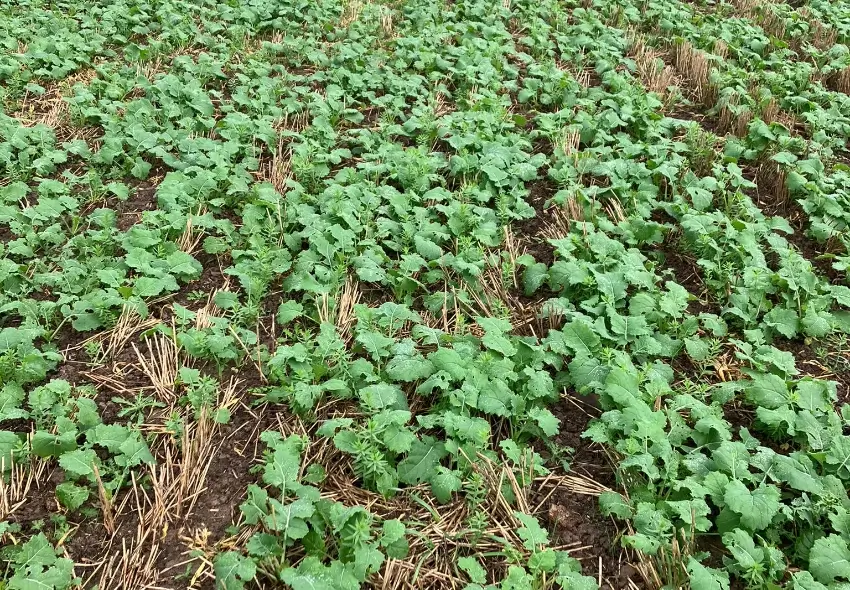
The principle is better described as soil priming: preparing the soil environment before establishment so that the emerging crop encounters favourable biological, nutritional and physical conditions.
This can involve looking at:
- available carbon sources;
- microbial activity;
- nutrient availability;
- soil moisture;
- aeration and pore space;
- residue management; and
- the biological environment surrounding the emerging root.
Rather than waiting until a crop shows signs of stress or nutritional deficiency, soil priming takes a proactive approach. The objective is to have the soil and rhizosphere functioning effectively before and during the critical establishment period.
This is particularly relevant ahead of autumn drilling, when falling temperatures and challenging soil conditions can rapidly restrict root development and nutrient availability.
You can read more on “biohacking” here:
4. Is there any benefit in using nitrogen-fixing bacteria with legumes or beans?
Potentially, yes, although it is important to understand what we are trying to achieve.
Legumes form a symbiotic relationship with Rhizobium bacteria, which develop nodules on the roots and subsequently contribute biologically fixed nitrogen. However, this relationship is not instantaneous. During establishment and before effective nodulation, the young plant still has a nitrogen requirement.
Free-living nitrogen-fixing organisms may therefore be considered as part of a broader biological programme during this early period. They should complement rather than replace successful nodulation and good crop nutrition.
What food source would you use in this scenario?
Protein hydrolysates, including fish hydrolysate, can be useful food sources. However, there isn't one universally "best" food.
Our choice depends on the objective of the brew and the organisms being encouraged. A fungal-focused brew may require a different food profile from a predominantly bacterial brew.
Start with the biological objective, then select the food source, rather than selecting a food source and hoping it produces the biology you want.
5. What are the best conditions for applying biological products?
One of the most important considerations with biological products is the environment into which they are being introduced.
Seed treatments and seed-zone drenches can be an excellent starting point because they position biology close to the developing root, where plant-microbe interactions can begin during establishment.
For soil-applied biologicals, we generally favour:
- Moist rather than dry soils
- Conditions where rain can help move surface-applied biology into the soil
- Moderate temperatures
- Lower UV exposure
- Adequate soil aeration
- Good soil-to-root contact and an active rhizosphere
For foliar applications, avoid the hottest and brightest part of the day where possible. Evening, night or early morning applications can provide cooler temperatures and higher relative humidity.
The key message is simple: think about biological survival as carefully as application rate.
You can watch our seminar on seed drenches here:
6. Does applying citric acid with BioPlus T affect the bacteria?
At appropriate rates, citric acid can be incorporated alongside BioPlus T without necessarily being detrimental to its bacterial or fungal components.
Citric acid is itself an organic carbon compound, and controlled additions may be used when managing the chemistry of a brew.
The important word, however, is controlled.
Excessive acidification can create an unsuitable environment for microorganisms. When adjusting the pH of a biological brew, we therefore recommend measuring rather than guessing. The objective is to make a controlled adjustment while maintaining conditions suitable for the organisms being cultured.
7. I have a hot-bin composter that produces leachate. Could I add this to a brew?
Potentially, but this is an area where we would recommend caution.
The microbial value of a compost leachate is heavily influenced by the material and conditions from which it originates. A well-managed, aerobic compost may contain useful biological populations, whereas poorly aerated or anaerobic material can contain undesirable organisms and metabolites.
Adding an unknown leachate to a brew does not automatically make the brew more biologically diverse or beneficial.
If you're introducing farm-produced biological material, think about:
- the quality and maturity of the compost;
- whether the process has remained aerobic;
- the smell and condition of the material;
- the feedstock used; and
- the consistency of the resulting material.
Biological diversity is useful when it is beneficial diversity. Introducing an uncontrolled biological source can also introduce organisms you did not intend to multiply.
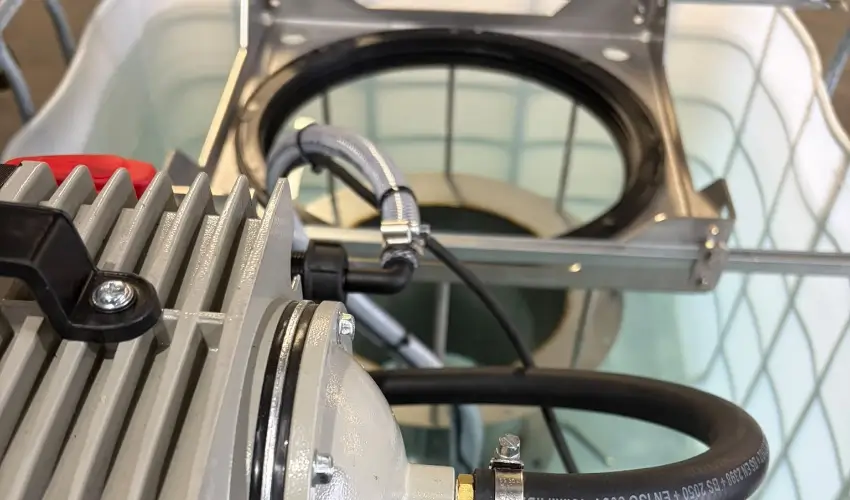
The Aiva BioAeration Unit (BAU)
8. What can the BioAeration Unit be used for?
The Aiva BioAeration Unit (BAU) was deliberately developed to offer growers flexibility rather than limiting them to one type of brew.
Potential uses include:
- aerating microbial consortia or "bugs in jugs";
- producing hybrid biological teas;
- aerating compost-based brews;
- producing compost extracts;
- washing beneficial microorganisms from seed or other biological material; and
- maintaining movement and oxygenation throughout biological solutions.
The development from our previous diffuser system was driven by a simple objective: make one piece of equipment capable of supporting a much wider range of on-farm biological practices.
That versatility also helps improve the potential return on investment, particularly for growers who want to experiment with different approaches as their biological programme develops.
9. Do you supply the BAU or diffuser equipment to Ireland?
Yes. Aiva can supply equipment to Ireland
Products are supplied on an ex-works plus delivery basis, with transport quoted according to the destination. If you're based in Ireland, speak to the Aiva team with your delivery location and we can discuss the most appropriate option and provide a direct quotation.
10. What pumps are used in the BAU, and what does each one do?
The BioAeration Unit incorporates two key forms of movement:
- 25,000 litre/hour vortex system
- 275 litres/minute air, as fine bubble diffusion and higher pressure air flow
They perform different but complementary roles.
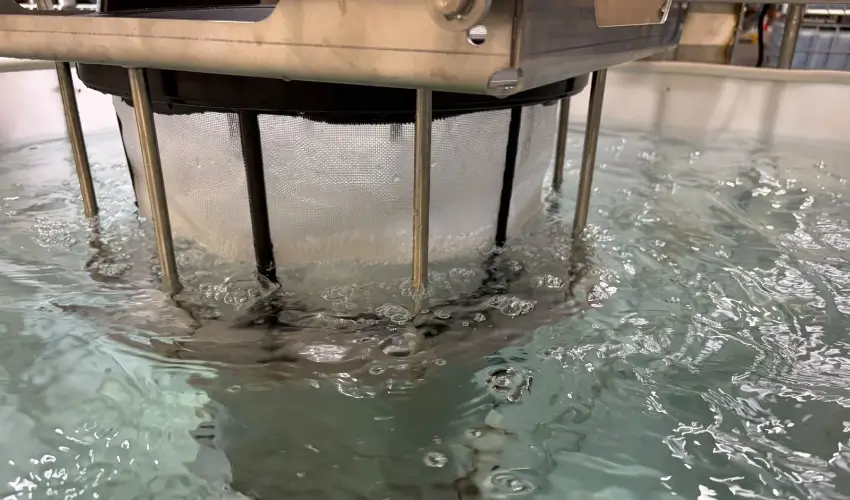
The vortex system creates strong circulation within the IBC, helping to create a vortex and reducing stagnant areas or "dead zones". This is important because simply introducing air at one point does not automatically mean that the entire liquid volume is being effectively circulated.
The air system can then be configured according to the brewing approach. It can provide more aggressive aeration, or air can be introduced through the diffusion system to generate much finer bubbles for different brewing requirements.
The combination of water movement + aeration is one of the major differences between the BAU and a basic air diffuser.
11. How do you transfer the finished brew into a sprayer? Can the BAU go on a trailer?
Yes to both.
Because the system is based around an IBC, the finished liquid can be transferred much like any other IBC-based product. Depending upon your setup, liquid can be drawn from the bottom outlet or pumped/sucked from the top.
The complete unit can also be mounted on a suitable trailer where this makes the brewing and application process more practical.
This flexibility was an important part of the design philosophy. Biological brewing needs to fit into normal farm operations if it is going to become a practical component of crop management.
12. What's the biggest improvement with the new BAU?
For us, it is the combination of substantially uprated pumping capacity, strong water circulation and dedicated air movement.
A diffuser introduces oxygen, but biological brewing also requires us to think about what is happening throughout the entire liquid volume.
The circulation provided by the BAU is designed to minimise potential dead zones while maintaining movement throughout the IBC. Combined with the ability to alter the aeration approach, this makes the unit significantly more versatile than our original diffuser kits.
The objective isn't simply to put more air into an IBC. It is to create a more consistently aerated brewing environment.
13. Can yellow rust be managed without fungicides when varietal resistance breaks down?
This question was directed specifically to Tim Parton, during his presentation segment, and his experiences of crop and disease management.
From a nutritional perspective, our focus is on supporting crop resilience rather than claiming nutrition can replace disease control.
A well-balanced nutritional programme can support plant structure, metabolism and the crop's natural stress responses. Monitoring nutrients such as nitrogen, potassium, sulphur, magnesium and appropriate micronutrients can form part of a wider crop-health strategy.
However, nutrition should not be presented as a guaranteed treatment for an established yellow rust infection, more as a tool for promoting plant resilience. Variety, disease pressure, weather, drilling date, crop density, nutrition and appropriate crop-protection decisions all need to be considered as part of an integrated programme.
To hear more of Tim’s thoughts, you can always follow the Intelligent Farming.
14. Should I routinely use a pan buster or subsoiler on heavier land?
Our starting point would be: don't cultivate simply because you can. Diagnose the problem first.
If a soil has genuine compaction or a restrictive pan, addressing it may restore air and water movement and allow roots to explore a greater volume of soil.
Cover crops can also play an important role. Different rooting architectures can help develop pores and biological pathways through the profile over time.
Where mechanical intervention is required, it should ideally be targeted to the depth and location of the restriction, rather than routinely working the entire profile unnecessarily.
A low-disturbance subsoiler or "rip and drip" approach can take this a stage further by combining targeted loosening with the placement of appropriate nutrition and carbon sources into the rooting zone.
The objective is not simply to move soil, but to create an environment in which roots, air, water, nutrition and soil biology can function together.
Seed & Brew Management
15. If I drench wheat seed before drilling, how much liquid can I apply without affecting the drill?
There isn't one universal answer because seed variety, dressing, application method, drill mechanism and the products being applied will all influence flow characteristics.
However, approximately 8 to 10 litres of total liquid per tonne of seed has been successfully used by a number of growers we work with as a practical reference point.
The formulation within that total volume is far more situation-specific.
One of the most important considerations is drying. Damp or tacky grain is more likely to bridge, stick or create inconsistent flow through metering systems.
After treatment:
- Aim for an even coating across the seed.
- Avoid localised over-wetting.
- Allow sufficient time for the seed surface to dry.
- Check seed flows freely before filling the drill.
- Confirm metering/calibration after changing the treatment.
Always check the compatibility and label requirements of any seed-treatment products being combined.
16. Should I add a teaspoon of my own soil to a biological brew?
It's an interesting idea, and the answer depends heavily on what you're actually trying to brew.
For certain compost or fungal-focused systems, incorporating a very small quantity of good-quality soil may introduce microorganisms associated with the local farm environment. This may be of particular interest where the compost itself has been sourced externally.
However, we would generally not recommend routinely adding soil to a defined microbial consortium or hybrid tea.
With a consortium, specific organisms have already been selected to perform particular functions. Adding an uncontrolled microbial population changes the starting biology and potentially changes competition within the brew.
There is also no guarantee that the microorganisms introduced with random soil will be beneficial simply because they are "local".
Our preferred principle is:
For compost-led brews, local biology may be worth exploring. For defined microbial consortia, maintain control over what you're multiplying.
The Bigger Picture: Biology Is Only One Part of Crop Nutrition
One of the central messages from the seminar was that brewing biology isn't about putting microorganisms into a tank and expecting them to solve every agronomic problem.
Successful biological farming requires us to think about the whole system.
Soil structure affects oxygen. Oxygen affects biology. Biology affects nutrient cycling. Nutrient availability influences root development. Roots influence carbon deposition and the rhizosphere.
These processes are interconnected.
That is why at AIVA we approach biological inputs as part of a wider crop nutrition strategy. The objective is not simply to add more biology, carbon or nutrients. It is to understand what the crop and soil need, when they need it, and how we can create an environment that allows the whole system to work more effectively.
Whether you're producing your first biological brew or have been experimenting with biological systems for years, our advice remains the same:
Measure, observe, understand your objective, and build the programme around what your soil and crop are telling you.
You can watch the full seminar here: