The Essential Guide to Field Beans

Olivia Bye
Crop Health Consultant, South
Understanding Nodulation Challenges
A frequent problem I’ve encountered this year, is with nodulation. Either I’ve found legumes to have not developed nodules at all, or they’re not active. Legumes can be tricky things to get right, year on year they require healthy amounts of macro and micro trace elements, some in larger quantities than you would expect from a cereal crop, which can be easily overlooked. In a companion cropping system a legume will be
fed first and in theory, could starve out the other crops The ability to sequester your own nitrogen in the soil for the following crop suggests you can apply less artificial inputs. If you’re like my farm at the moment, you might have had a carbon advisor suggest ideas for cutting down emissions, decreasing the application frequencies of nitrogen can decrease a farms carbon footprint in the long run.
Field Beans
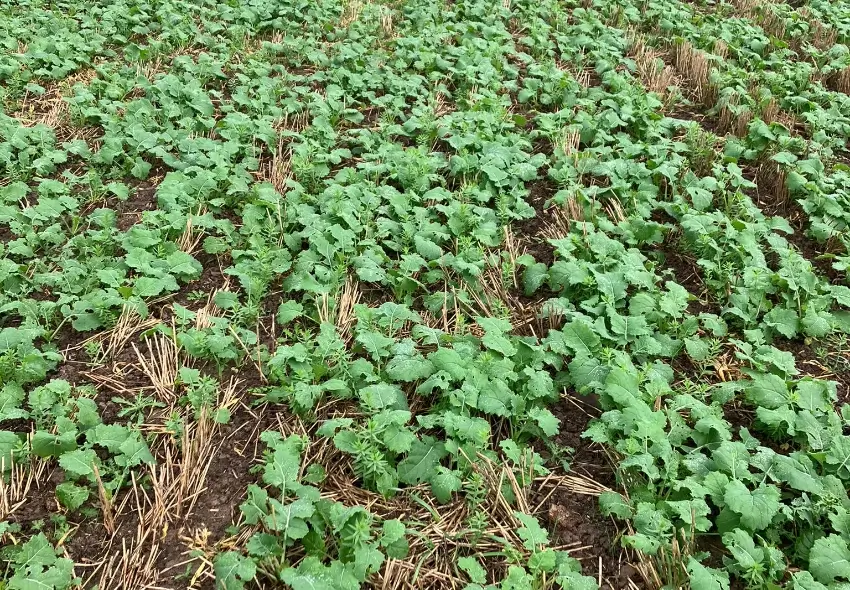
This year, field beans have been relishing in the constant rainfall and have thrived when most crops have suffered in the weather, which has led onto some interesting conversations about their endless list of benefits, and how to get them right. So, as we look forward to planning for next season, lets discuss why beans might make a good fit into split and the nutrition to get them off to the best start.
As a break crop, beans are of a lower risk compared to other options such as OSR, as well as the varietal resistance to diseases, such Ascochyta offer some reassurance. Their naturally forgiving nature means they can serve as a great break crop between cereals to improve the soil medium from variables like structure to microbe activity. Beans are particularly handy for organic farmers on account of their protein content. The significant protein content in their seeds make beans a great option for local produced proteins for both human and animal feeds, as well as for green manure.

Nodulation is achieved with the presence of rhizobium bacteria, which is found in the area around the plant roots - the rhizosphere. There are many different types of species of rhizobia which depend on the parent crop currently, and historically, growing in the field. Although, this concept is more important when considering the possibility of inoculating your soil with the rhizobia to boost nodulation.
Getting the crop off to the best start.
Nodulation is a wonderful tool…however the various criteria needed to optimise this needs season ahead planning. Nodulation is best achieved as the soils become warmer and with a ph around the 6.0 mark. Along with considerations such as compaction and rainfall levels. Furthering this, there are several nutrient requirements for beans and their successful nodulation.
Critical Nutrients for Nodulation
Mo
Molybdenum
Molybdenum is component of the enzyme in rhizobium bacteria, pivotal for nitrogen fixation, namely nitrogenase which is utilised to convert nitrogen into plant available ammonium.
Mn
Manganese
Manganese, although when you think of marsh spot, peas immediately comes to mind, although beans can also suffer greatly and lead to rejection. Therefore, when choosing a field most suited for growing beans, avoiding sites with alkaline land will favour development.
Mg
Magnesium
Magnesium, as akin to manganese, magnesium deficiency’s can be elevated from the choice of land. Magnesium can be present on acid soils but are easily rectified. Magnesium is critical for many processes in the plant from chlorophyll to protein synthesis.
Other Essential Nutrients for Beans
The Role of Potash, Cobalt, and Boron in Legume Growth
In particular, beans are more likely to respond to an application of potash than they are phosphate. Legumes demand for potassium is very high. Potassium is important for enzyme reactions, and in particular for the formation of root nodules. Phosphate is directly linked to the development of healthy roots, which when you have a crop standing 5’3, is of great importance. Cobalt is a component of leghaemaglobin is important for increasing yields in legumes through the fact cobalt is responsible for oxygen supply to nitrate molecules, which as we know is then converted to nitrogen, in the nitrogen cycle. Lastly, boron which is for maintaining the height and strength of legume crop as tall as beans
The quantities of nutrients can be obtained from an animal health tissue analysis. The importance of testing any crop should be maintained throughout the whole season, but especially becomes even more important later in the season to push final yields and proteins before we put the crop to bed for harvest. As always, tissue analysis should be used In conjunction with soil, sap or brix analysis also to gain as many snapshots of the nutrient availability over time as possible before treatment.
Recommended products
Ready to enhance your crop's productivity naturally? Discover Pulsar & Multiextra! If you are looking for customised solutions tailored to your farm's unique needs. Our expert team is here to help you achieve healthier, more productive crops through innovative and sustainable practices.

PULSAR™
Comprehensive, highly efficient, multi nutrient package supporting the plant after applications of Nitrogen or other macro-nutrients. Contains: Amide N, S, Mg,

Multiextra
Balanced multi nutrient package aiding in crop health and hardiness, useful in facilitating balance, increasing nitrogen efficiency and crop quality. Contains:...

Aiva Magnesium
Highly efficient foliar magnesium. A true amide complex that increases uptake and efficiency of trace elements. Magnesium is vital to plant growth and health.

Aiva Manganese
Highly efficient foliar manganese. Contains: Amide N, Mg, S, Mn. A true amide complex that includes supporting beneficial nutrients that contributes to...
About the Author
Olivia Bye
Crop Health Consultant, South
Nice to meet you, my name’s Olivia, and I’m a Crop Health Consultant here at AIVA. My passion is creating healthy, nutritionally dense crops within a system that benefits ecologically. Education is key to the way I work. Providing my clients with knowledge allows them to make informed decisions to benefit their systems.
Got a question? Contact Me.