OSR Seed Drenches

George Hepburn
Crop Health Consultant, East
Use Less, lose Less
Another season has rolled around, and thoughts are now turning to next years OSR crops.
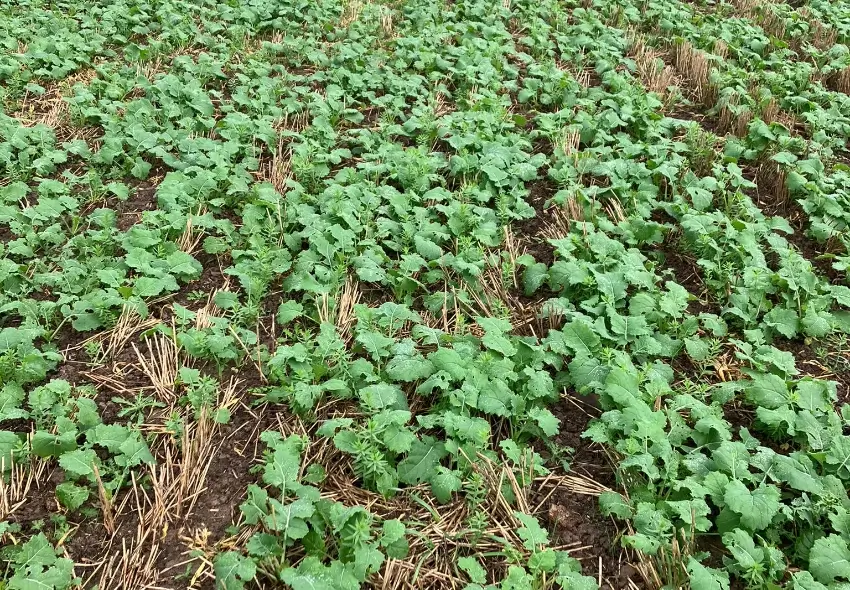
Its common knowledge that the crop’s yield potential is set in the first 30-60 days, so getting the plants away to the best possible start is paramount. Rapid growth is also key to beat CSFB and the plant needs good root development to gain biomass going into autumn/ winter. We are seeing more and more farmers invest in liquid applicators, which in AIVA’s eyes, has to be the best way of getting the nutrition and biology you want in the right place (so you can use less) and at the right time (so you can lose less).
However, there are different schools of thought about the make up of the seed drench. There are 3 examples, a full package AIVA way, The John Kempf way (fresh from Groundswell), and JP’s way (a farmer who thinks he might have cracked the OSR puzzle).


The Full Aiva Package
Here we are looking to hit 4 areas. Nutrition, Biology, Carbon and Silicon. Some might say this is over the top but we want the plant to get away and motor through the growth stages. Citadel adds carbon and amino acids. The BioPlus T is providing luxury amounts of beneficial biology to form quick associations with the new roots and the Soteria will help with the morphology of the plant, thicker cells walls, more leaf hairs etc. We could then follow up with some Foliar Phosphorus, Silicon, Salicylic Acid and trace elements as soon as there is leaf area to hit.

| Citric acid granules | 0.3 |
| Soteria (Silicon) | 0.1 |
| Nurture N (humic/fulvic) | 1.0 |
| Disca (Calcium) | 3.0 |
| Pulsar (traces) | 3.0 |
| Turret (N,P,Mg,Zn) | 5.0 |
| AIVA Boron | 0.2 |
| Biolplus T brew (biology) | 25.0 |

The John Kempf package
John Kempf at Groundswell had a slightly different point of view. AEA are of the opinion that Phosphate is not required as what we want is the immediate association between the soil biology (fungi in particular) and the new seedling, if we apply P it means the plant doesn’t look to make these associations. At AIVA, we use low levels of P just to get the plant away and not make it lazy, but JK takes it a step further and says remove it totally from the seed drench. Now there is the option of applying it foliarly when the crop has some leaf area to hit. John Kempf says Mg, B, S and Mo are the key nutrients to apply alongside some carbon in different forms. These are nutrients required to build complete proteins which insects (including beetles) cannot ingest / digest. So using our products, his programme would look a bit like this:
| Pulsar (traces) | 5.0 |
| AIVA Boron | 0.3 |
| AIVA Magnesium | 5.0 |
| Citadel (fermented molasses) | 15.0 |
| Sea2Soil (fish hydrolsyate) | 15.0 |
The JP ‘friendly farmer’ method
Finally we have JPs method (a friendly farmer), who thinks he has mastered OSR! Which interestingly is a hybrid of AIVA and John Kempf.
At Planting:
Citadel/Boost: 10.0
Sea2Soil: 20.0
At Cotyledon and 2/3 true leaves:
| Rampart (Potassium Silicate) | 0.25/5.0 |
| Armour (Salicylic acid) | 0.25/0.5 |
| Pulsar | 3.0 |
| Sea2Soil | 5.0 |
| Citadel | 5.0 |
| Boost | 5.0 |
About the Author
George Hepburn
Crop Health Consultant, East
Hi, I’m George. I’m a Crop Health Consultant at AIVA. For my whole career, I’ve been working on promoting Crop Health through more natural methods, trying to renew and preserve fertility. Working on benefiting mainly arable systems, I also have expertise in root crops, focusing on building better nutrition and natural crop health.
Got a question? Contact Me.