Dry Weather And Low Soil Moisture: Implications for UK Cereal Crops

Thom Harrington
Business Development
Current Situation
Spring 2026 Weather and Soil Moisture
Following a notably wet winter across much of England, the transition into spring 2026 has been
characterised by a shift to drier-than-average conditions, particularly across central, eastern
and southern regions. The Environment Agency’s March 2026 Water Situation Report confirms
that rainfall during March reached only 83% of the long-term average, with soil moisture
deficits (SMDs) beginning to develop earlier than is typical for the time of year across large
areas of arable England.
The Met Office long-range forecast for late April through May 2026 indicates that high-
pressure systems are likely to remain dominant, favouring extended dry spells, especially in
eastern and southern cereal-growing regions. While some localised rainfall is possible,
confidence is increasing that soil moisture recharge opportunities will be limited through
much of the remainder of spring.
Satellite-based monitoring from the Copernicus Climate Change Service shows that, by March
2026, parts of lowland England and northern Europe were already trending toward below-
average surface soil moisture, despite adequate winter recharge. This reinforces concerns that
crops entering key growth stages may face progressively tighter water and nutrient
availability.
Weather references:
Impact on Cereal
Impact of Dry Conditions on Cereal Crop Performance
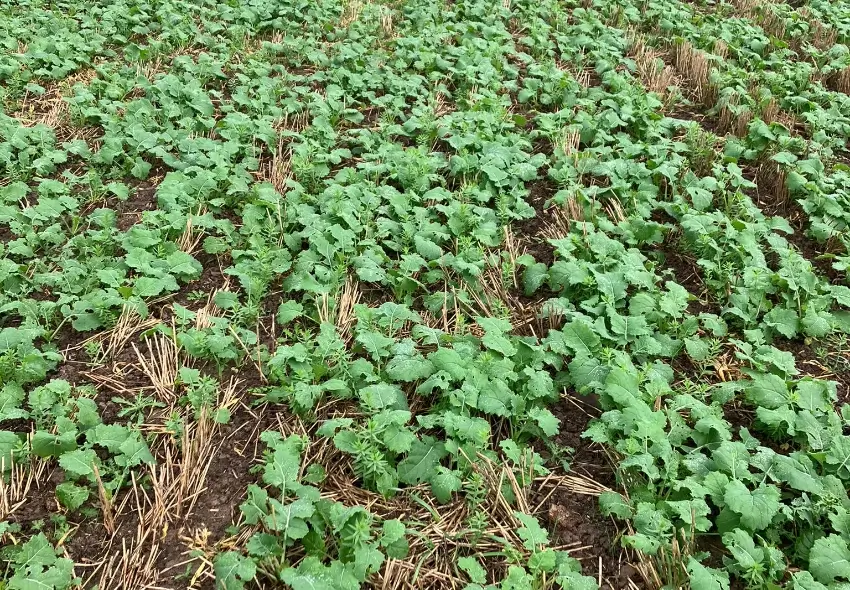
Low soil moisture during spring has a disproportionate effect on cereal yield formation, as it coincides with critical phases such as tillering, stem extension, and early canopy development. AHDB and ADAS analyses from recent dry springs demonstrate that moisture stress during April–May limits both tiller survival and nutrient uptake, leading to thinner canopies and reduced yield potential, particularly on lighter soils.
In dry soils, nutrient movement to roots is restricted. Nitrogen—whether applied as granular or liquid fertiliser—requires adequate moisture for dissolution, microbial conversion, and uptake. Without this, applied inputs can remain unavailable in the root zone, reducing nitrogen-use efficiency and grain protein potential. [ahdb.org.uk]
While dry weather may temporarily suppress foliar disease pressure, weak crop canopies often become more vulnerable later, particularly if rainfall returns abruptly. Thin crops also intercept less sunlight, compounding yield losses during grain number determination.
AIVA’s Flex Technology
Using AIVA’s Flex Technology as Foliar Nutrition to Support Crops Under Dry Stress
Under prolonged dry conditions, the effectiveness of foliar nutrition depends not only on what
nutrients are applied, but how efficiently they enter and move within the plant. AIVA’s Flex
Technology has been developed specifically to improve foliar nutrient uptake and utilisation when
conventional soil and foliar pathways are under stress from limited moisture.
How Flex Technology Works
Unlike traditional foliar fertilisers that rely on nutrients held as free ions, Flex Technology uses
amide nitrogen–carbon complexes to carry nutrients into the plant. These complexes are
actively absorbed through the leaf cuticle, rather than depending solely on passive diffusion,
which can be severely restricted during dry, low-humidity conditions.
Once absorbed, the amide complexes transport both nitrogen and associated macro or
micronutrients directly into plant metabolism. This delivery mechanism is particularly relevant in
drought scenarios, where:
- Reduced transpiration limits nutrient movement
- Root uptake is restricted by soil moisture deficits
- Conventionally applied foliar salts can dry on the leaf surface before effective absorption.
Benefits
Benefits Under Dry Spring Conditions
Independent and on-farm trials conducted in 2024 and 2025 have shown that Flex Technology based foliar nutrition can significantly increase nutrient uptake efficiency, even at relatively low application rates. Measured increases in plant tissue levels of low-mobility nutrients such as manganese, copper and zinc have been consistently reported following Flex Technology applications, compared with standard foliar formulations.
In practical cereal agronomy, this translates into several advantages under dry stress:
- Improved enzyme activity and photosynthetic efficiency, supporting biomass retention during moisture stress
- Stronger cell wall formation through improved copper and calcium delivery, helping crops withstand physiological stress
- Enhanced stress tolerance and canopy longevity, reducing the risk of premature senescence during spring droughts.
Because Flex Technology complexes are rapidly absorbed, they are also less dependent on prolonged leaf wetness, making them well suited to the short spray windows that often accompany dry, high-pressure weather patterns.
Role Within an Integrated Nutrition Strategy
Flex Technology is not positioned as a replacement for soil-applied fertiliser programmes, but as a stabilising tool within an Integrated Nutrient Management (INM) approach. During dry springs, such as how spring 2026 is shaping up to be, where soil nitrogen and micronutrient availability becomes unpredictable, Flex Technology based foliar inputs can help maintain metabolic function and nutrient supply until rainfall resumes.
Typical agronomic strategies include:
- Low-rate foliar nitrogen with Flex Technology during early stem extension (GS30–31) to support tiller survival
- Micronutrient applications (Cu, Mn, Zn) during stress-prone growth stages where soil supply is compromised
- Use alongside fungicides or PGRs to maximise application efficiency without increasing traffic or crop stress, subject to standard tank-mix compatibility checks.
Evidence from Recent Foliar Uptake Trials
Recent foliar nutrient uptake trials have compared AIVA nutrition products based on Flex Technology with conventional agricultural foliar products across grassland and winter wheat. All products were applied at equivalent kg/ha of the target nutrient, and crop uptake was assessed using sap analysis at 6, 24 and 48 hours after application, providing a clear comparison of speed, magnitude and persistence of nutrient uptake.
Flex Technology uses non-salt, complexed nutrient formulations, which minimise crystallisation on the leaf surface and significantly reduce the risk of scorch. This enables more efficient absorption through the leaf cuticle, particularly under dry or stressful conditions.
Magnesium Uptake
Across both grass and winter wheat, AIVA Magnesium consistently outperformed industry standard magnesium sulphate products at every sampling interval. Results showed:
- Direct, continued uptake
- Higher sap magnesium concentrations at 24 and 48 hours
- More sustained nutrient availability compared with industry standard Magnesium Sulphate-based products
These findings demonstrate that AIVA Magnesium provides rapid and reliable correction of magnesium deficiency, making it well suited to situations where soil uptake is restricted by low moisture.
Manganese Uptake
In separate trials on winter wheat, AIVA Manganese significantly outperformed industry standard manganese sulphate products across all measured time points. Sap analysis confirmed:
- Quicker uptake following application
- Substantially higher manganese levels within plant tissue
- Stronger and more persistent nutrient presence up to 48 hours post-application
This improved performance highlights the advantage of Flex Technology for delivering low-mobility micronutrients, particularly during dry springs when traditional foliar salts can struggle to enter the plant efficiently.
Practical Implications
Taken together, these results reinforce the role of Flex Technology foliar nutrition as a practical tool for maintaining crop nutrient status during periods of dry stress. Faster uptake, higher efficiency and reduced leaf scorch risk allow growers to achieve greater nutritional impact from lower or equivalent application rates, supporting crop resilience when soil nutrient availability is compromised.


Relevance
Relevance for Spring 2026
With Met Office outlooks pointing toward a continued risk of below-average rainfall and high-pressure dominance through late spring, technologies that reduce reliance on soil moisture for nutrient uptake become increasingly valuable. Flex Technology’s ability to deliver nutrients efficiently under dry conditions provides growers with a practical agronomic buffer against moisture-limited seasons that are becoming more frequent in UK cereal systems
Outlook and Management Priorities
With long-range forecasts pointing toward a continued risk of below-average rainfall through the remainder of spring 2026, growers should closely monitor soil moisture, crop colour, and canopy development. Fields on light or shallow soils are likely to show stress first and may benefit most from targeted foliar interventions.
Ultimately, rainfall over late May and June will remain decisive in determining final yield and grain quality. Until then, maintaining nutrient availability, protecting green leaf area, and avoiding unnecessary crop stress will be central to safeguarding cereal performance in what is shaping up to be another challenging spring for moisture management.
- Current Situation
- Impact of Dry Conditions
- Using AIVA’s Flex Technology
- Benefits Under Dry Spring Conditions

About the Author

Nick Thorp
Technical Lead
Hello! I’m Nick, AIVA’s Technical Lead. For a few years now, I’ve been journeying on the regenerative road, developing crops, and applying inputs in a way that benefits the whole system. I started off as a grassland specialist, now I also develop arable systems towards a healthier, more profitable direction.
Got a question? Contact Me.